

I’ve Been Changed – With Bobby Rush and Robert Weaver Jr., aka Wolf
by Eric Doidy
September/October 2025. My book Going Down South. Mississippi blues 1990-2020 (Le Mot et Le Reste), published in France in 2020, gave me the opportunity to spend a couple of months at the University of Mississippi in Oxford, as a visiting scholar among the wonderful people of the Center for the Study of Southern Culture. But I often hit the road and, barely ten days after my arrival, chance encounters opened the doors of the Mississippi State Penitentiary: Parchman Farm.
Like any blues fan, I only knew of Parchman Farm through the song Bukka White wrote about the place (he was one of the many bluesmen imprisoned there) ; through the recordings of inmates collected by John and Alan Lomax between 1933 and 1959 ; and through David M. Oshinsky’s 1996 book, ‘Worse Than Slavery’: Parchman Farm and the Ordeal of Jim Crow Justice. More recently, Il Blues magazine drew my attention to the harrowing gospel and blues recordings by inmates published by Ian Brennan on the two volumes of « Parchman Prison Prayer » (Glitterhouse Records). But I was far from imagining I would myself have the opportunity one day to pass through the gates of these mythical, yet infamous, premises – let alone be a witness there of a change coming.
Located in Sunflower County in the heart of the Delta, and surrounded by barbed wire, Parchman Farm is an agricultural penitentiary covering more than 7,000 hectares. Founded in 1901, the prison was essential cog in the new form of segregation known as “Jim Crow,” which was established in the Deep South after slavery: it provided the cotton industry with a captive and exploitable workforce, disciplined by particularly harsh conditions of detention, including poor sanitation, constant humiliation, and extreme violence on a daily basis.
In 2022 (after a series of violent riots in 2020) a new Superintendent, Marc McClure, was appointed by Commissioner Burl Cain. A former police officer and warden born in West Point (a small Mississippi town close to Alabama, between Tupelo and Tuscaloosa), Marc McClure, now in his mid-fifties, has an unusual life story. His first position as a Superintendent happend to be in the prison where his own father was an inmate – he had killed his son, Marc’s big brother. Marc did not treat him any differently from the other inmates, but he somehow found the resources to forgive him, and that changed his life. « There’s such a culture in Corrections, of not caring and being cold and detached that none of these people matter », he noticed, « they’re only a number. » The Commissioner and the Superintendant proceeded to change things, by treating the inmates with dignity and encouraging them to practice their religion. « If you treat people right and they act right, everything gets easier », McClure says.
It is in this context that this video was filmed:
Here, we tell you the whole story of that unique moment by introducing you to the protagonists – a former rock star seeking peace after a dissolute life ; a venerable blues legend who knows a great deal about sin ; a gracious young lady poised to make her mark on American roots music ; and, first and foremost, an extraordinary gospel singer who has been sentenced to life more than three decades ago, and goes by the name of Wolf. But let’s start with Bryan Ward, the man behind this project.
- Bryan Ward : « I’ve Been Changed has become the prison anthem. And Wolf is the voice. »
Bryan W. Ward was born in Germany in 1967 to an American military family. He grew up in New Windsor, a small town in Maryland, at a time when Led Zeppelin still dominated certain radio stations. He founded the band Bonepony with a Texan musician named Scott Johnson and signed with Capitol Records in the early 1990s. The album Stomp Revival (1994) was a huge success; Bonepony’s concerts were electrifying and the band became a sought-after opening act (Santana, ZZ Top, Jeff Beck, Crosby Stills & Nash, Little Feat, etc.). Undermined by the excesses of the “sex, drugs & rock ‘n’ roll” lifestyle, Bryan quit at the end of the decade. At rock bottom, he found Jesus in a Catholic church in Nashville. Since that day, he has devoted himself to gospel music. He owes his first prison tour to Gilbert Romero, a preacher and former gang member who served time in Folsom Prison in California. « He said, ‘We’re going to do this Western Pennsylvania prison tour. I wonder if you’d like to go.’ And I’m like, ‘Johnny Cash? That kind of shit?’ And he goes, ‘Yeah.’ And I’m like, ‘Yeah, I’m in.’ » He then learnt a lot from Romero. « Gilbert, being a former inmate – two 10-year sentences – he knew prison speak, and he was Latino, so he could change into Espanol if he needed to. »
Bryan eventually settled in northern Mississippi at the invitation of a friend, Steve Thompson (with whom he formed the band Thompson Ward). He joined Kairos, a Christian organization that works in prisons, and spent ten years touring Mississippi prisons on “Kairos walks,” seminars lasting several days during which inmates talk, pray, and play music. It was there, in Parchman, that he met an inmate named Robert Weaver Jr., nicknamed Wolf: « when I did my first Kairos walk in 2010, everybody kept telling me about this guy Wolf, this older Black man who had this incredible voice. » The closing ceremony took place in the prison unit that houses death row, Unit 29.
« We’re doing this closing ceremony, and this guy Wolf walks in. I’ve never met him. There’s probably 500 people in the gym, maybe, inmates and free world people. It was filled. And I said, ‘I understand we’re supposed to play this closing music’, and he goes, ‘Yeah’. And I go, ‘What do you want to do?’ Maybe we played Open the Eyes of My Heart, that’s a big song in prison. And then he looks at me after we did that, and he goes, ‘Play a chord.’ And I go, ‘What chord?’ And he goes, ‘Any chord.’ And so I hit this A, just a standard rock star A, and he starts singing Faith, Faith, Faith, just a little more faith – an old Negro spiritual from 200 years ago. Oh, man. We jammed, and the place went crazy. Guys hanging off the rails, and as I’m leaving with my friend Walt Harper, he’s sitting in the front seat of his truck driving, and he’s shaking, and I go, ‘Walt, are you okay?’ And he goes, ‘Of course I’m not okay. A guy with horns tattooed on his head just hugged me and told me he loves me.’ Walt never came back again, but I did. Wolf and I did all these revivals, and I know he’s like a brother. I never knew what his testimony was. I never knew what brought him in, and I never asked. I asked him one time over at Unit 30. We were doing a Kairos walk, and I said, ‘Wolf, are you ever going to get out of here?’ And he goes, ‘Nope.’ He goes, ‘But God is good.’ And so he’s called. »
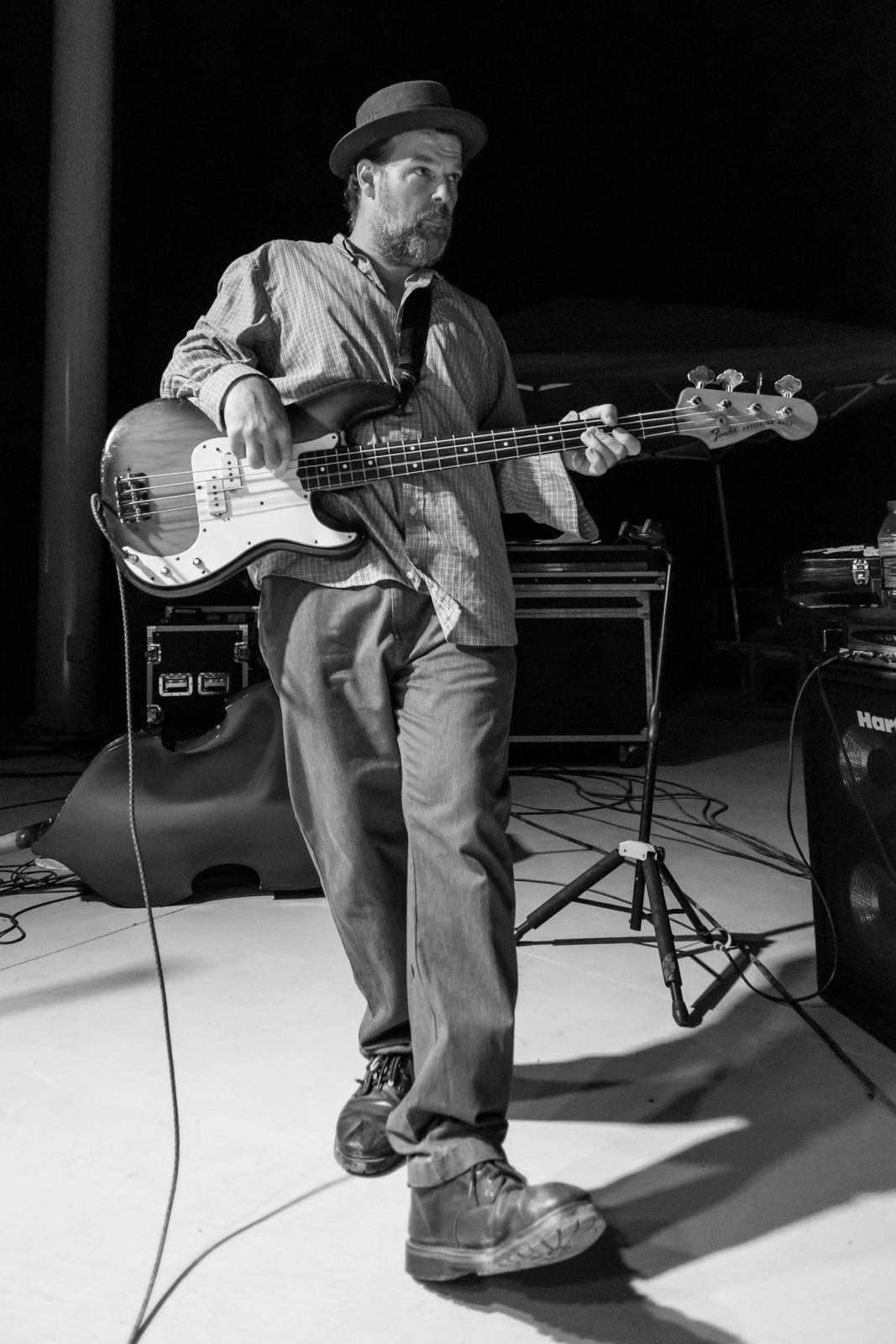
Bryan Ward (courtesy Bryan Ward)
Over the years, he developed a friendship with Wolf. He eventually asked him to perform the old gospel song, “I Know I’ve Been Changed.” It was a song that had moved him deeply when he heard a parishioner named Linda Carr sing it in a Baptist church of North Mississippi: « My understanding is that she has an extreme heroin addiction, and sometimes she’s lost on heroin, and sometimes she is the greatest gospel singer I’ve ever heard. She comes and goes with the Lord, and that is a thing. Sometimes the light is so heavy for you that you cannot stay in it. This is why some of our most righteous people and important people are completely wretched in alcoholism or drug abuse because they cannot handle the light. » Bryan left the church telling his friend Steve, « I found THE song. » « I know I’ve been changed » is a song that resonates with the inmates’ experience. While the inmates Bryan meets in Mississippi prisons are mostly African American, the songbook imposed by Kairos consisted almost entirely of White gospel music such as Bill Gaither’s. With « I know I’ve been changed », the Holy Spirit finally starts moving. « Every Black guy in the room, they all went to the same MB Church that I did. And so they knew the song because their aunties and their mamas and their dads had schooled them on the song. They all started singing, and there was this boom. And when I was done, I just sat down and was like, “Wow.” I had learned how to speak the language that Gilbert did. »
Bryan put together the recording session in November 2024 in Parchman. « And now I went back to Wolf, and “I’ve Been Changed” has become the prison anthem all over the state of Mississippi. That is the anthem, and Wolf is the voice. » Today, he has only one goal: to make the outside world aware of the voice and, even more importantly, the name of his friend Robert Weaver Jr., Wolf. As if he wanted to right some wrongs. « Alan Lomax, he is definitely a true American hero, what he did for the Library of Congress and our musical history of our country. When you listen to “Ole Alabama, mm-hmm, my God, my God,” all those ethnic folk derivations of the Black gospel songs, the slave dirges…. We have them because he took the time to record them. But what is terribly interesting and tragic is you’re never going to know who those guys were who sang them. You know who the President was at that time, but you don’t know who that Black man was who sang them. » Bryan is a man on a mission.
- Bobby Rush : « No rehearsal, no nothing. Just, it happened »
Bobby Rush and Bryan Ward have been friends for a long time—Bryan recorded Bobby’s acclaimed album « Blind Snake » (Deep Rush Records, 2009) co-producing a handful of the tracks, Chinkapin Huntin’ and She Alright, She Alright. When Bryan asked Bobby to come to Parchman Fram to play with Wolf, he knew Bobby wouldn’t hesitate for long – the penitentiary was no stranger to him. « I had a jail ministry I was involved in. Wasn’t so much about the blues, but it’s kind of ties in. (…) I got into jail ministry because of my involvement with Black men as a whole. Were more incarcerated than any other race, Black men. » Bobby Rush’s gaze deepens. He talks about his story – that of his own and of his people, intimately linked. « When I was a boy, we had to go outside to a toilet. We didn’t have electric light, no showers in the house. (…) Somebody asked me just a few days ago, have I ever been in the Army? I said, ‘No, but I’ve been in a fight all of my life.’ You follow me? I’ve been in a fight all of my life. »
« I have a sister that’s next to me, she has a son, got triple life. Triple life. He was 19 years old, been in there about 30 years now. Triple life, with no parole. My nephew. Now, you preach to people about falling down, right, and getting back up. You got three life sentences, how do you get up? I mean, you’re not going to get out. I happen to know this kid. It’s not good that he got life, but I always think about how God saved his life by giving him life – because he would have took somebody else’s life or his own life if he didn’t get life. »
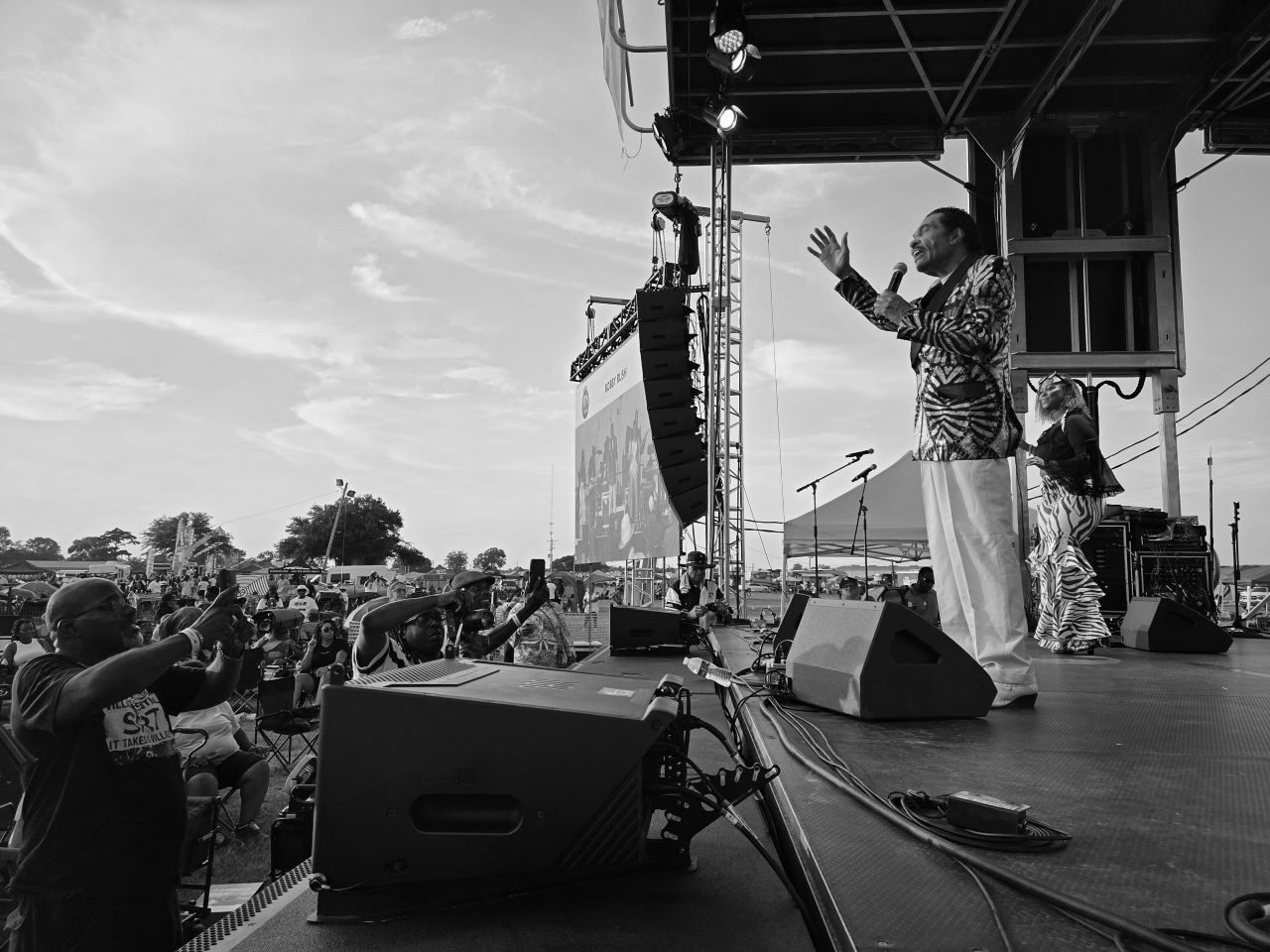
Bobby Rush Mississippi Delta Blues & Heritage Festival photo Eric Doidy
Bobby Rush began prison ministry several decades ago—quietly, on the sidelines of his commercial career. He explains that the starting point for him was an intervention at a school for troubled students, during which the chaplains asked him to go and talk to those they called the “bad kids”: « My father is a preacher, and I didn’t want to go against the grain of the preachers who I respect so highly. But I said, ‘Listen, we shouldn’t use the word bad kids. What’s a bad kid? Lack of knowledge, sure, but, bad kids, let’s don’t go with bad kid.’ So I went in and talking about mistakes. »
He approaches his interactions with inmates with the same philosophy. « I made mistakes in my life. There’s some time I should have been in jail, but I just didn’t get caught, you know. My theme in jail was talking about mistakes. When a man or woman makes a mistake, you can always correct yourself if you know you’re making a mistake. Paul said he was the worst sinner in the world. I doubt it. He’s probably number three. Me, number one. (laughs) So I go in there and talk to the ladies and the men, mostly men, most of them Black men, about how you make a mistake. If you make a mistake, if you do something you know is wrong, you can change any time you get ready because you know it’s wrong to do. »
« The hardest thing that ever happened to me in my life – trying to find words to approach a man on death row. That was hard. What do you tell a man when you’re on death row? Get on your knees and pray, admit what you’ve done, get forgiven what you have done… But that’s the man on the outside of the shoe. When the shoe’s under the foot, that’s a different story. I put myself in that position to have a word to them like I was in their shoes. And I think I came off pretty good with them because I was honest with them. I played my harmonica to them. And I said to them, I said, and I usually word like this, I said, ‘I came a long way, but we got a long way to go.’ Because the things I used to do down in Louisiana, I don’t do anymore. I said, ‘I used to carry water for 15 cents a day. A nine-year-old, had to work that hard every day. I used to pick cotton in my cotton field where I used to live. I’m still picking cotton, but I happen to own a piece of the field.’ I said, ‘I’m free. Can’t you see that I’m free? Look at me. Do you believe I’m free? If not, let me tell you guys, I got the shackles off my feet and the chains off my mind. I said, now what you have to do, you may be shackled in here, but nobody can take the chains off their mind but you.’ They got it. Because you don’t have to be free to be free. You don’t have to be locked up to be locked up. You don’t have to be down to be down. You don’t have to be up to be up. It’s all state of mind. You can lock me up in jail, but you can’t lock my mind up. That’s free. They got it. »
Freedom. The same word can describe Bobby Rush’s attitude when it came to record with Wolf for the « Changed » video. « I didn’t have anything to do with the filming of it. Didn’t know what they were going to do. But I know it was about spiritual things, so I went in that day. I remember going in and I told the guys, ‘Listen, today is a day that I trust.’ I remember he asked me, ‘So what do you mean by you trust?’ I said, ‘I trust in God will deliver me what to say and do today.’ (…) No rehearsal, no nothing. Just, it happened. Didn’t know no plan. » Amen, Bobby Rush.
- Amelia Eisenhauer : « I found the real Jesus in a prison »
A recent graduate of the prestigious Berklee School of Music (Boston), Amelia Eisenhauer has been playing the guitar and violin since the age of 6, and she appeared twice as a contestant on the American Idol TV show (2016 and 2026). Originally from Southern Illinois, she now calls Nashville her home. A 26-year-old woman who is very much at home in her generation, she is reclaiming the cultural heritage of American music. She discovered the prison world during a Christmas concert organized by her stepfather Bryan Ward at the Marshall County Jail. She then took her first steps at Parchman Farm, « where so much History is just imbued ». « It’s just a fascinating but also saddening thing », she says while reminiscing her feelings at the time, « you walk around and there’s grave sites all over it. Some of them are not necessarily marked. They don’t necessarily know who’s buried there, because no record was kept. They were seen as undesirables. »
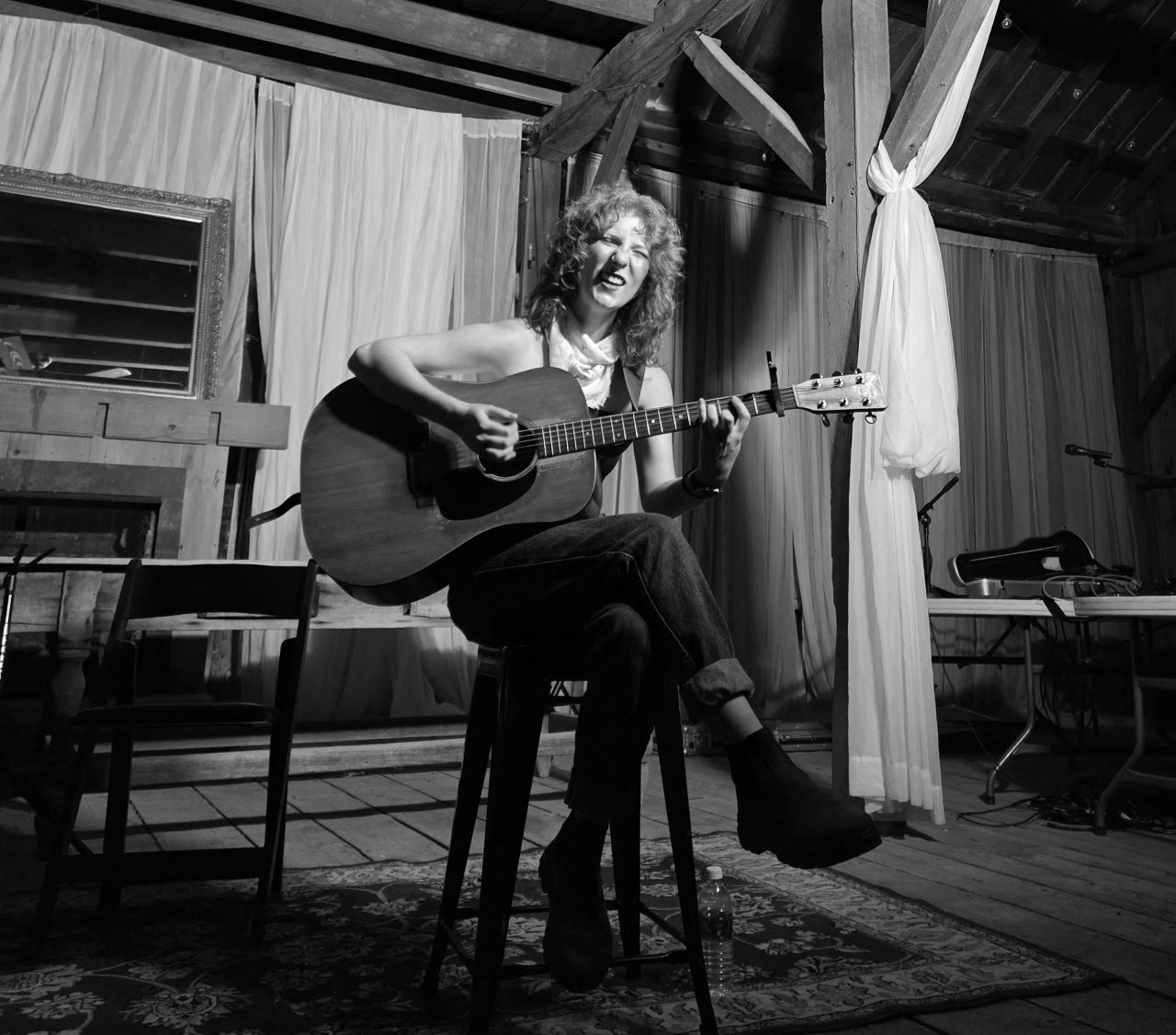
Amelia Eisenhauer photo Eric Doidy
There, she explains she was able to « experience something that was a lot more real than what you will find in any church. » Talking about discovering « radical forgiveness », she concludes « I would firmly say I found the real Jesus in a prison. » In front of the inmates, she performed a moving rendition of Feeling Good, the song Nina Simone turned to a hymn to emancipation during the Civil Rights era. She gradually realized that « it gave performance a level of meaning that it didn’t have before. To see how much you could impact folks who need it most, you know. But also how much they impact you. » The experience changes her profoundly – “I’ve Been Changed,” as in the song sung by Wolf, whom she accompanies on the violin. « I thought about myself singing it as a teenager. Older self wanted to kind of be like slapping the younger self, because I was just singing it. I didn’t understand the gravity behind it. Wolf lives it. And that’s what makes it so powerful. There’s not an inch of that that he doesn’t live. »
« He’s a very powerful person. There’s not too many voices like his, you know. It’s like you can’t hear the song the same after you’ve heard him, especially live. When you’re in the room. Even the toughest guy in the room will start bawling like a baby. It moves that strongly. It’s like being caught in the ocean’s strongest current. You can’t fight that. It’s that sort of event that changes your entire outlook of what music is, what music is to you, how you can heal with music. It’s like… There’s a lot of superfluous stuff going on. I mean no insult to our Top 40 artists – they’re great, you know, they have massive audiences for a reason. But they can’t do what Wolf can. Not many can. It’s rare. »
- WOLF (ROBERT WEAVER JR.) : « THERE’S A LOT OF TALENT HERE ON THIS FARM »
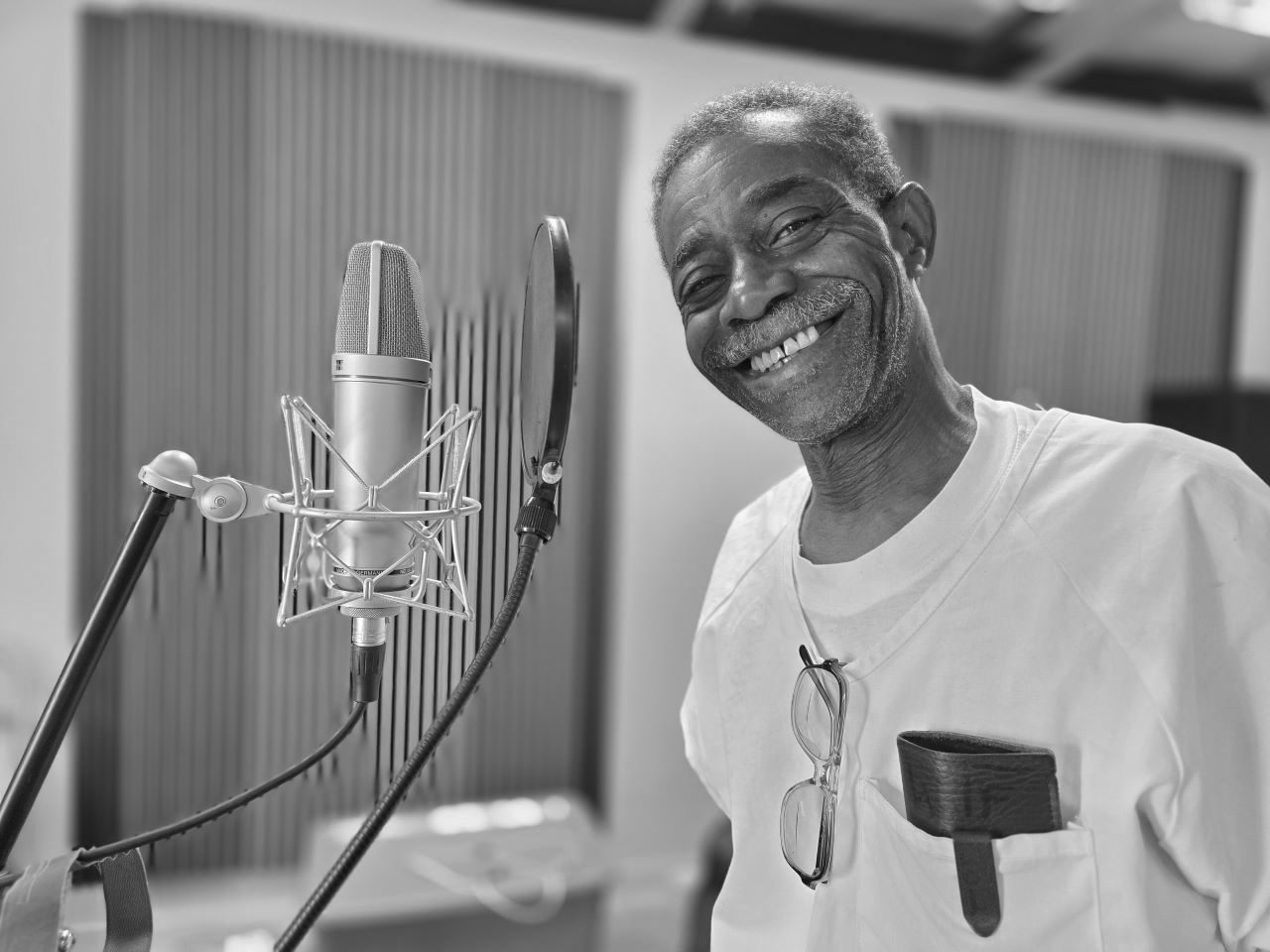
Having been incarcerated since 1993, Wolf knows Parchman Farm like the back of his hand, and everyone, inmates and wardens alike, treats him with respect. He is a man with a warm and benevolent smile who exudes great serenity. His calm, naturally deep voice contrast with his frail-looking body. When you talk to him about music, especially gospel music, his face lights up. Here is the entire conversation from our first meeting:
« My name is Robert, I was born in 1950. I was born and raised, partially raised, in Chicago, Illinois. I moved here to Mississippi. This is my mother’s home. I moved to a little place called Logtown, Mississippi, on the coast. When the government bought the land down there, my grandfather moved from Logtown to Bay St. Louis, Mississippi, which is on the coast. Logtown this is where this big Space Center is built down there. So I grew up down there on the coast : Bay St. Louis, Mississippi.
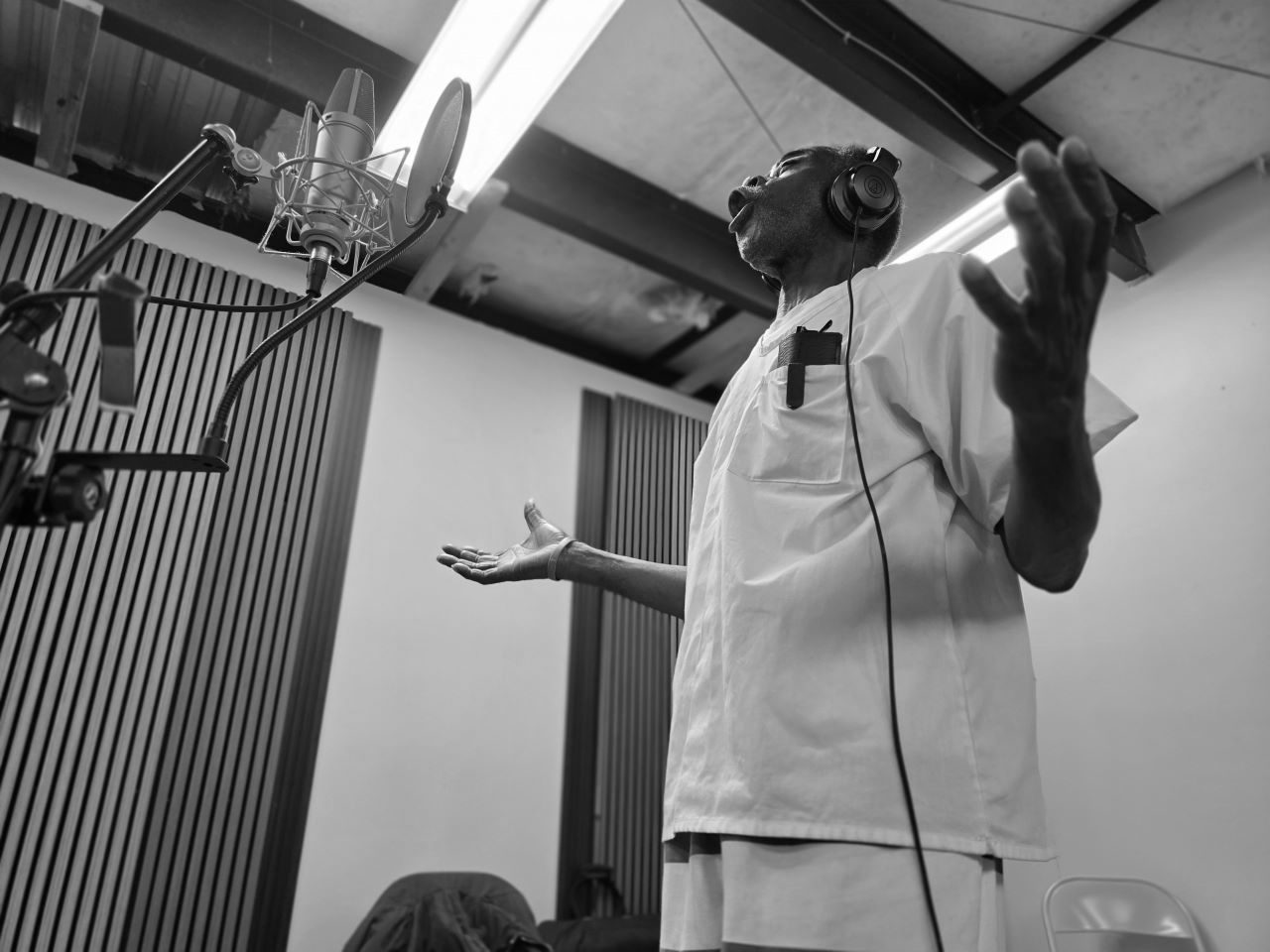
Wolf photo Eric Doidy
I’m 74 years old. Music has been my life. I started out singing a lot of R&B, doo-wop, gospel music. Temptations were my favorite group when I grew up. Motown. My Girl, The Way You Do the Things You Do… So it was the group I idolized for its music and dance. On the gospel side, Reverend James Cleveland was one of my gospel idols. And the Gospel Caravans – that was back during that time, the latter part of the ’60s and the early ’70s…
As I grew up I went into the military. Went over to Europe. Been through Paris. Stayed over in Europe for almost eight and a half years. Decided to get out of the military. Came home… Got into a lot of the R&B bands, here in Mississippi. Kicked that around for a while. Some were good and some were not so good ! With a lot of those bands, my level of singing was on a greater level than there was. There was a lot of animosity there, so I got away from bands. Started getting back into the church. The church was really my foundation.
Did you play an instrument?
I used to play the drums ! Started out playing the drums. I learned beating on cans and garbage tops, that’s how I learned how to play the drums, to tell you the truth. Beating on pots. Back then we used to have a garbage can, you step down on the lid and the lid would pop up. So that’s how I learned how to play drums. My grandfather bought me my very first snare drum. I was around 8, 9 years old. Then I learned how to play the set – I was around 11, 12 years old. Started playing the flute, got away from the flute. All my other brothers were musically, so I stayed with the singing. I felt my pull was more toward the singing than the playing.
So I got back into church. I was the lead vocalist in the choir. I was also the lead vocalist in some of the gospel groups I was in. And gospel just seemed to be my niche. I got the opportunity to go to a lot of different talent shows. I just really believe today that it just wasn’t for me. God had his hand on me and he wanted me to sing and praise for him. So that’s what I’ve been doing.
What church were you in?
Baptist. I sang in a Baptist church, I sang in a Catholic church, Methodist. I sang in most of all the churches there in my hometown. We had a community choir. There were some different musicians and singers from Presbyterian, Methodist, Baptist, Catholic, and we had a community choir. I was the lead vocalist in that. Plus, in my own church choir, I was the director and vocalist.
So it didn’t change much when I came to prison. I got with a few guys here in prison. We had a little group going. Then Mr. Rudy Seals, who used to be the culinary director here, he started a church choir here. We already had the Parchman Band was already here and existed. So he started the church choir. And I got involved in church choir, lead singer in it too. And we did a lot of traveling here around the Delta and places going to different churches, schools and things like that singing. Then when he retired because of his health, things kind of waned. So I was really on my own for singing by myself for a good period of years until around ’96, ’97, when I got the chance to put a group together out at Unit 23.
At Unit 23, we used to have church services in the cafeteria, and it was an inmate-led service. Had a choir. It was a unit choir. I had went from 40 people down to 13. And it was the most talented group of vocal voices that I had ever been around in a long time ! And the harmony, oh, man, you’re talking about harmony was, it was there !
Do you remember the name of the singers?
One of the singers was Ronnie Gatti. He’s down in Greene, no, Rankin County now. James Hamilton, he’s out. Ron, Big Ron Miller, he’s out. Clarence, Clarence D, Clarence, not Clarence D… Clarence, I’m trying to think of his last name. He was from Ocean Springs, Mississippi. He’s out. Most of the guys that was in the choir are out now. At that moment in time. And I’m one of the original founders of the choir who’s still here at Parchman.
And so now, over the period of years, we was doing zone worship. Every Sunday, we’d have worship service. And that’s where we were worshiping : on the zone, 104 men on the zone. So I led that, and more and more guys began to get into it and participate. So finally when Superintendent McClure and Mr. Cain came into operation, they said they were going to build a chapel here at Unit 30. Never thought I would see it, to see something like this, because all of our music and praise had been mostly on the zones and in the cafeteria. Now we’ve got a chapel, a beautiful chapel. Oh, man, I wish you’d get the opportunity to see it ! And we have a unique choir and a group of musicians there. We have a dynamic keyboard player, drummer, bassist, lead guitarist, and rhythm guitar. And it’s about, I think it’s almost about a dozen singers besides myself.
I lead praise and worship. I’m the one that gets everything started. And once I get it started, I pass the baton on to them. And normally I would do maybe a song or two with them. I’ll do a solo sometime before the message or either after the message. And a lot of the ministries that come in, I do music singing for them too as well. Some come and don’t have, so they want us to do the music for them. So I have that golden opportunity to do that too as well. That is a blessing in itself.
What does it change in your feelings when you sing there as opposed to on the zone?
Well, you know, having a house where not only the zone can worship, but all of 30 can come together and worship. And also giving them the opportunity to hear it, sing. Most of the, majority of the guys on this prison farm know me by my singing. « Have you met Wolf », « He is the one » (laughs). So that is the rapport that I have with the majority of men here on this farm. They know me by my singing too. And more so the way I carry myself in my ministry too. I teach Bible study as well, along with the singing music ministry. But God has blessed me on the vocal side, and it’s just something I really love doing. I enjoy doing it at any time. You say, « Hey Wolf ? », I’m ready.
By the way, may I ask you, where does the nickname « Wolf » come from?
My grandfather. He said I hollered like a, when I cried, I hollered like a wolf. My lungs were just that loud. So I got that nickname « Wolf ».
Early on.
Early on. It stuck. So most of, everybody called me « Baby Wolf » or « Wolf ». They said, « Man, you got some lungs on you like a wolf. » So that’s how I got that name.
Was Howlin’ Wolf popular in your family ? The blues singer.
Howlin’ Wolf, oh yes. I used to see him on the TV, especially on the Midnight Special show he used to host. [Note : Here, Robert confuses the blues singer Howlin’ Wolf and the radio and TV host Wolfman Jack] Yes, Howlin’ Wolf was a unique individual ! On the gospel side, I don’t know if you ever heard of a group called the Mighty Clouds of Joy. Joe Ligon and the Mighty Clouds. Now, they were the gospel Temptations to me, while the Temptations were the R&B side. The blues… I liked the blues, but I was more into R&B. The Dixie Hummingbirds were one of my groups too… You ever heard of a group called the Zion Harmonizers? The Soul Stirrers ? The Violoneers ? I’ll tell you, one of my favorite gospel singers before he went to R&B, that was Sam Cooke. Little Richard – he started with gospel. He did a lot of gospel before he went rock and roll. There’s quite a bit of groups out there that had an influence on my life. The Tempts were the group that really, because I could do either one of the voices [he changes his voice], I could go from there to there.
I apologize – you were telling me how singing the gospel in this prison changed over the years. Can you explain further ?
Well, you know, back then when I first came into prison, a lot of the things that were going on now wasn’t going on then. In fact, we didn’t even have church services back then. So mostly it was really, to me, individual praise. I was out on the yard somewhere, and I would start singing. Some guys would gather around me, « Man, I ain’t heard that song. » Sometimes I’d do a lot of R&B, and then I’d get out of R&B and go into a lot of the gospel. So I found myself for a period of years, in a lot of the camps that I was in, I was doing R&B and gospel.
And as the command began to change, different people getting in, like in the Superintendent’s place and Commissioner, the doors began to slowly open and we began to have, like I said, worship on the zone, praise on the zone, Bible studies on the zone. And it was at that time, then they broke it down to 104 on the zone. We were actually around almost 208 to a zone. So it was like 416 to a building. 208 in this zone, 208 on this zone. So they broke it down to now where it’s only 104 now on each zone. So there was more people. And the zone worship really kept everything alive and going. And it allowed a lot of the guys who were being called to preach, gave them opportunity to sharpen their skills in preaching. And you know, I always say the word says practice makes you perfect, but that’s the biggest lie that’s ever been told. Practice makes you skillful in what you’re doing. So the more you practice it, the more skillful you get at it. And this gave them that opportunity and also opened a lot of doors for the vocals too to come in. A lot of guys who were, I would say, shy, you know, wasn’t quite out and open. I was able to pull them out. And in 30 we used to have a gospel competition. My group won the first gospel competition at Unit 30.
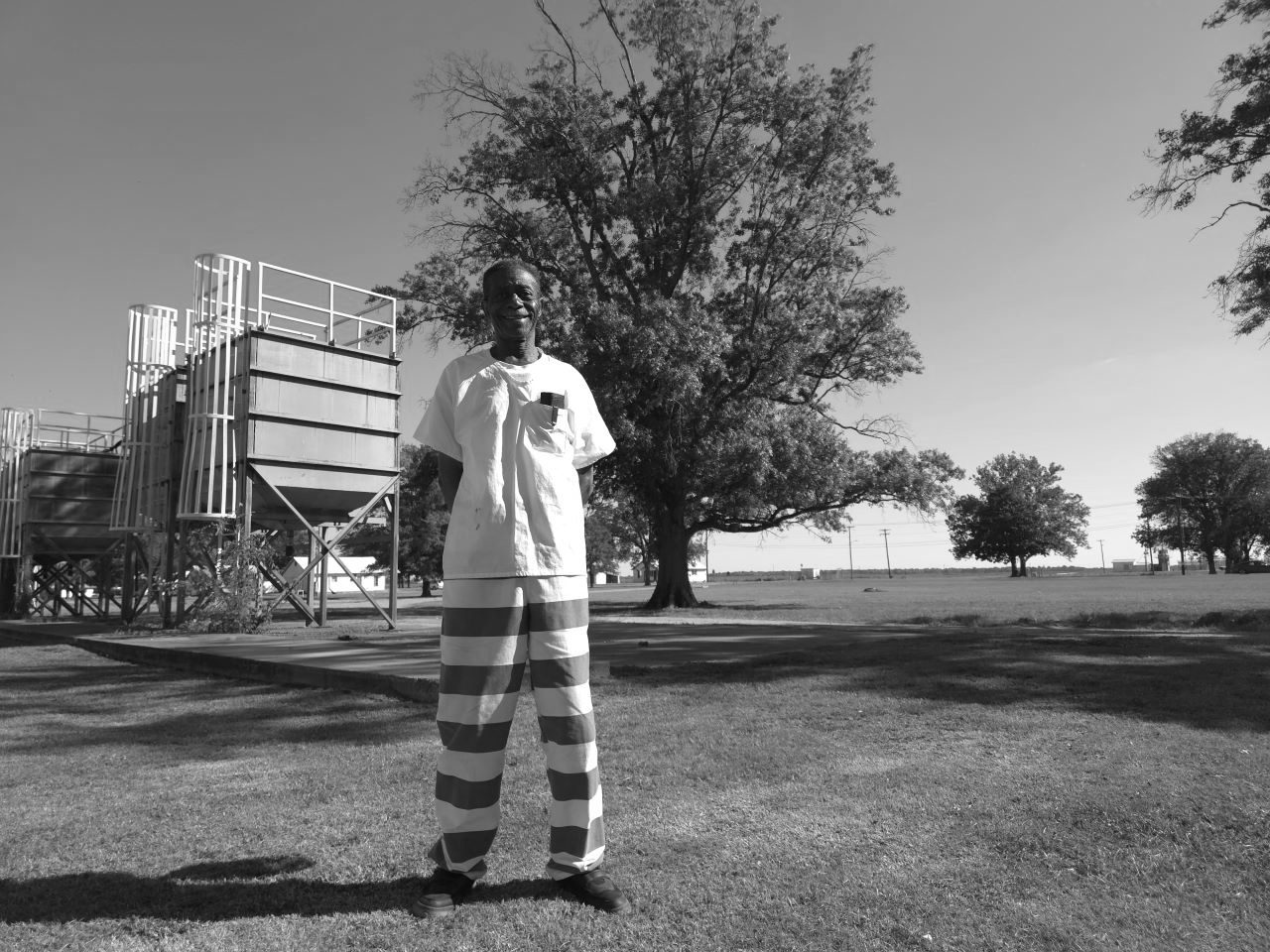
Wolf at Parchman photo Eric Doidy
Okay. So there was a lot of singers.
Oh yeah. There’s a lot of singers over there now ! There’s a lot of singers over there now. In fact, there’s a lot of singers on this farm. A lot of them just into their own thing. There’s a lot of talent here on this farm. Not just singing, musician-wise too. A lot of skillful talent. They’re just lazy and just don’t want to do anything with the gifts that they have. So I think in time, if you continue to encourage them and motivate them, they’ll come around. Thanks to guys like Bryan who comes, you know, Kairos, and plays with us and helps the guys on the vocals and their music ability. That’s a plus for them too because they get the opportunity to learn from a professional. You know, and a guy who loves what he’s doing too. So that’s a plus in their cap too. We all love Bryan.
Do you have another job in prison?
Oh yes, I work. I’m a warehouse clerk. I’m the one who’s responsible for the food that comes into Unit 30. When I first came to prison, I got into welding. Graduated out of welding, then I became a clerk in a camp. I got in when they first opened in 32. I don’t know if you heard about 32, that’s one of the camps they opened in 1990. I got to be a cook in 32 for about three years. And after three years, I got the opportunity to be the clerk in the maintenance shop. And then eventually I became the clerk for the whole kitchen, ordering food and so forth like that for the satellites, CWCs [Community Work Centers], and things like that. So when they closed 32, the kitchen moved to 30. So when they moved to 30, still doing the same job. Still doing the same job today.
I just wish you had the opportunity to come to one of our worship services ! We have a worship service on Sunday at 1 o’clock. 1 o’clock or a little bit after 1, because it’s after everybody eats lunch. And then we have service, and it’s like from 1 to 3. It’s been a change of people who have come into the place of authority that’s pushing what you see going on now. They are for this. You know, they’re not throwing up any opposition against it. The are for this ! They want to see the positiveness in the prison, you know. And through the preaching of the gospel and the ministry itself, it’s really throwing light. This used to be a real dark place at one time, and now the light is really beginning to shine in this prison system. And it’s a great thing. God have some people here who have that vision, have been given that vision and trying to fulfill it.
We have services Friday, Saturday, and Sunday. We have Bible study Monday, Tuesday, Thursday. We have Kairos every Wednesday night. So there’s not a man on this farm right now that have come to Unit 30 or this prison farm can’t say he haven’t heard about Jesus. It’s all over.
Do you have contacts with inmates who went out? How did it change them?
We had a lot of guys here just in the recent months left and went home. Active in the ministry out there. Some are associate pastors out there. Some have initiated a prison ministry, they’re coming back to minister in the prison – not only here at Parchman but prisons throughout the State. Thet have a ministry team that they’re doing. And most of the guys that have left here that have been involved in the ministry are doing well out there right now. Doing well out there.
Before you were here – did you have already other family members in Parchman or in prison in Mississippi?
Did I have any other family members in prison? No, no, no. Oh, I had a cousin that was here in Parchman. That was way, way, way, way, way, way back. But he’s the only family member I ever had up here in Parchman. Oh, and my brother. My brother was here for about five, six, eight years. He got out, went to California, and started a body and painting business. He’s doing well. He’s doing well out there.
Did you sing together?
Oh, yes ! Me and my brothers, we all used to sing together. That was the fun part. My mother used to dress us up when we was little. And in Chicago on Saturday nights, Fridays and Saturday nights, everybody would go down to the corner. And that’s where all the groups, you know, everybody that thought they could sing or dance or do anything, you know, you get out and do your little thing. So when we came to Mississippi, it was the same thing. My mother would get us in every little program she could push us into singing. You know how it is once you start to get older. You start wanting to do your thing and go, yes and so… The last time me and my brothers sang together, I think it was either at my mother’s funeral or my father’s funeral.
They still carry some of their vocal skills. My baby brother is a band director. He was a band director for a major school down there on the Coast. My other brother, he was with a group for a while. He left them. My oldest brother, he’s in California. I don’t even know if he’s still doing anything at his age, he’s about 80 now. But, you know, we were some pretty tough little boys. I think if we had stayed with it, we could have made our mark in the music business – either side, R&B or gospel. I think we could have made our mark.
Did you ever record some music before ?
No. The first recording I had here was with Bryan. No, I did a few demo tapes. When I was going to a talent show here in Jackson, I had to do a demo tape, two songs. I was going to do Star Search, I had to do a demo tape.
What is demo tapes ?
You put on there two of your best songs. I went to a studio. The studio guy, he did the recording, he did the mixing, he did it all. All I had to do was just do the vocals.
Was it vocal only or with instruments?
No, it was just vocal only. He put the music into it. When I first did the demo, I did it without music, then the second time I did it, I did it with the music. So, like I said, that was my first opportunity.
When was it ?
Oh, this was… back in the ‘70’s [Note : The television show Star Search aired from 1983 onwards, so Wolf’s memory may be failing him here]. The thing with music, you gotta love it. I listen to a lot of the so-called talent out there. I really think they’ve given a lot of them singers a voice, because they don’t sound nothing like the recording, the CD. They don’t sound nothing like that, in person. And you can tell when the voice has been added to it. Processed.
Pardon me, it’s a stupid question, but can you listen to CDs in here? How do you listen to music?
Well, we have radios. I just got a brand new TV here last week, and it has a radio on it. Plus you can buy a radio off the canteen. They used to sell the MP players and CDs, but they stopped that for some reason. So most of the music that I listen to come off the radio. And a lot of the gospel programs that’s on the gospel channels and things like that, I pick up a lot of the songs that I hear from that. I may hear a particular song and they may do it this way, I’m going to do it this way. Add my own little flavor and twist to it.
What are your favorite radio programs?
I like T.D. Jakes. Robbie Zacharias, I like him. Charles Stanley. This guy that has this music. They do a gospel music thing on PBS on 23.1 every other week. It’s called Gospel. And what they’re doing, they’re doing segments of gospel from the early 1900s all the way up. Showing how the gospel music has changed in the church worship and praise and where it’s at today. And how a lot of the gospel music has a lot of the secular flavor in it. And if you listen to a lot of the gospel rap, a lot of it has that : the secular beat, which is what a lot of the youngsters are attracted to. They’re attracted to the boom, boom, boom, boom, boom, you know. That, you know, instead of the words. I’m not a rapper. I’m a singer. Rap is all right for those who like it, I don’t knock it, but I’m a singer. That’s where I’m at my best. »
Wolf is currently recording his first album, produced by Bryan Ward. On Parchman Farm.
Interviews recorded Sept. 14-20, 2025 in Parchman (Mississippi), Cobden (Illinois), and Greenville (Mississippi).
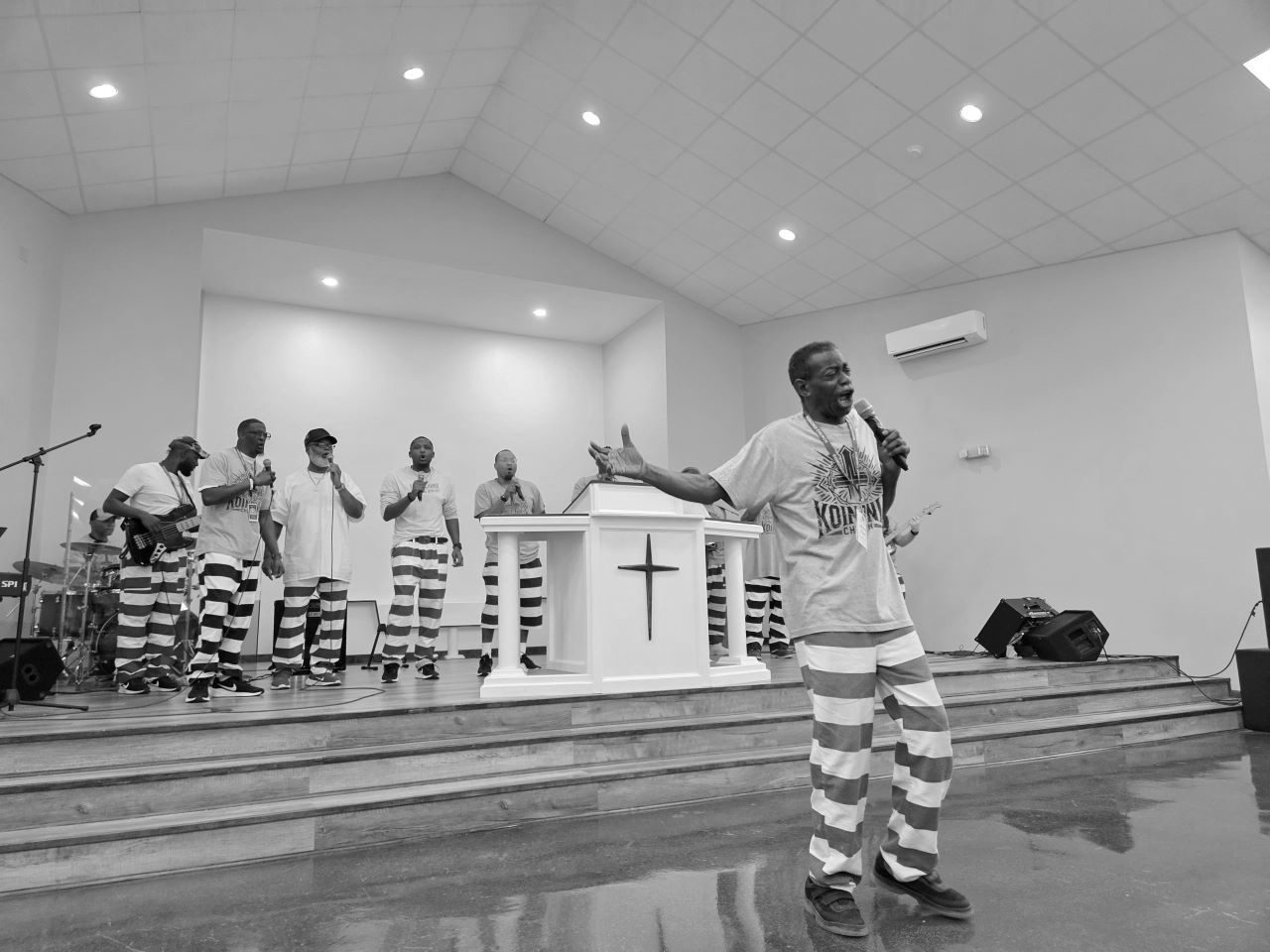
Gospel at Parchmam photo Eric Doidy








Comments are closed