

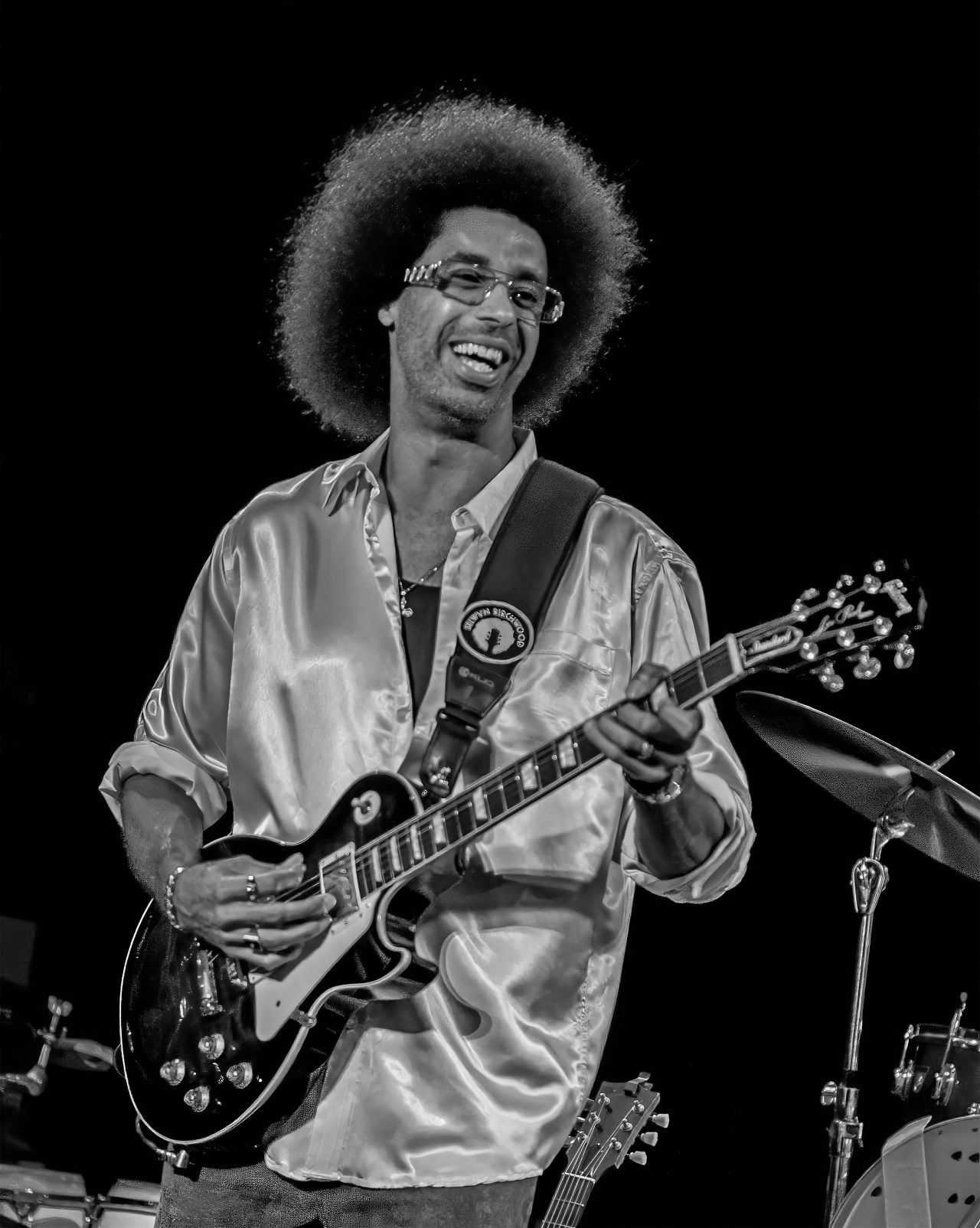
Selwyn Birchwood – Florida Man
By Matteo Bossi
At the beginning of our interview with Florida’s native Selwyn Birchwood we remind him of what has become a sort of unwritten rule, that is him having a different drummer on every album. This new “Electric Swamp Funkin’ Blues“, out now on Alligator Records is no exception. And he laughs about it, “Yes, It seems that way, man…It’s the touring thing that a lot of people think they wanna do but then you go out and you’re in a different city every night, you’re away from your home and your family and stuff and so people find out it might not be for them. It’s always the drummer, I don’t know what it is!”
This new album “Electric Swamp Funkin’ Blues” is maybe a statement, a definition of yourself and your music.
Yes, that’s the idea, I’ve been trying the whole time to find my own sound… with this album I’m really confident, I’ve found my sound, this is what I do. When you hear my band well I don’t think you’re gonna hear another band that sound the way we do. That is my desire. I’ve been asked in interviews, it must have been 12 or 14 years ago, if I can describe my music in three or four words and after a few seconds I came out with electric, swamp, funk and blues…I’ve been using this ever since. When people ask me what we play I say blues but I don’t think it really comes across, it’s something unique within the genre, focused on songwriting and emotions, not just a vehicle to play guitar.
With this album I feel like we’ve got all of that and I cannot wait for people to hear it. For me it doesn’t make sense to copy this exact way that guys would play back in the fifties and sixties…I really appreciate that, it’s the foundation of what I do somewhere along the lines it’s a weird thing. It’s one thing to emulate but that is just the first step, the baby step…you’re supposed to graduate past that and be able to create something, to innovate. I feel that’s lacking in the music today, there’s a lot less imagination and creativity. This new album is definitely a far cry from that.
You are back in the producer chair also, after a couple of Tom Hambridge produced records.
I’ve been producing the majority of my albums…I would do the tracking and production in Florida and then I would send the album to Tom Hambridge in Nashville and he would have a couple of ideas, do some twix and started to mix it…this is the first time I’ve been the sole producer, it eliminated some barriers, so for this album you get the actual sound I had in my head when I was writing these songs. It has been translated pretty much perfectly onto the album. It sounds the the best than any of my records so far. As long as each album is better than the previous I can be happy and this one to me is much better.
You’ve always covered different topics in your songs, often with a very sharp look about what’s going on in the world.
Yes, I feel that’s what the music and blues music has done for a long time. But it’s another thing that I think it’s pretty bizarre in this genre, it’s 2026 and some people are wanting to sing about “getting behind the mule and plow” or sing about growing up in a farm. Man, I wasn’t raised on a farm and I don’t pretend to be, it turns into this weird cosplay sort of- I’m dressing up like a real bluesman and sing the real blues. But sometimes is comes out as forced nostalgia of a time that has passed, it’s inauthentic to the person singing, it feels like an act. I try my best to only write about what I know…there’s so much different stuff going on that I don’t why people are singing about Chicago in the Sixties. I’d rather write about what I know about. I’m not a very extroverted person, I’m always observing the world around me and put my observations into my music, that is the approach I take into my songwriting.
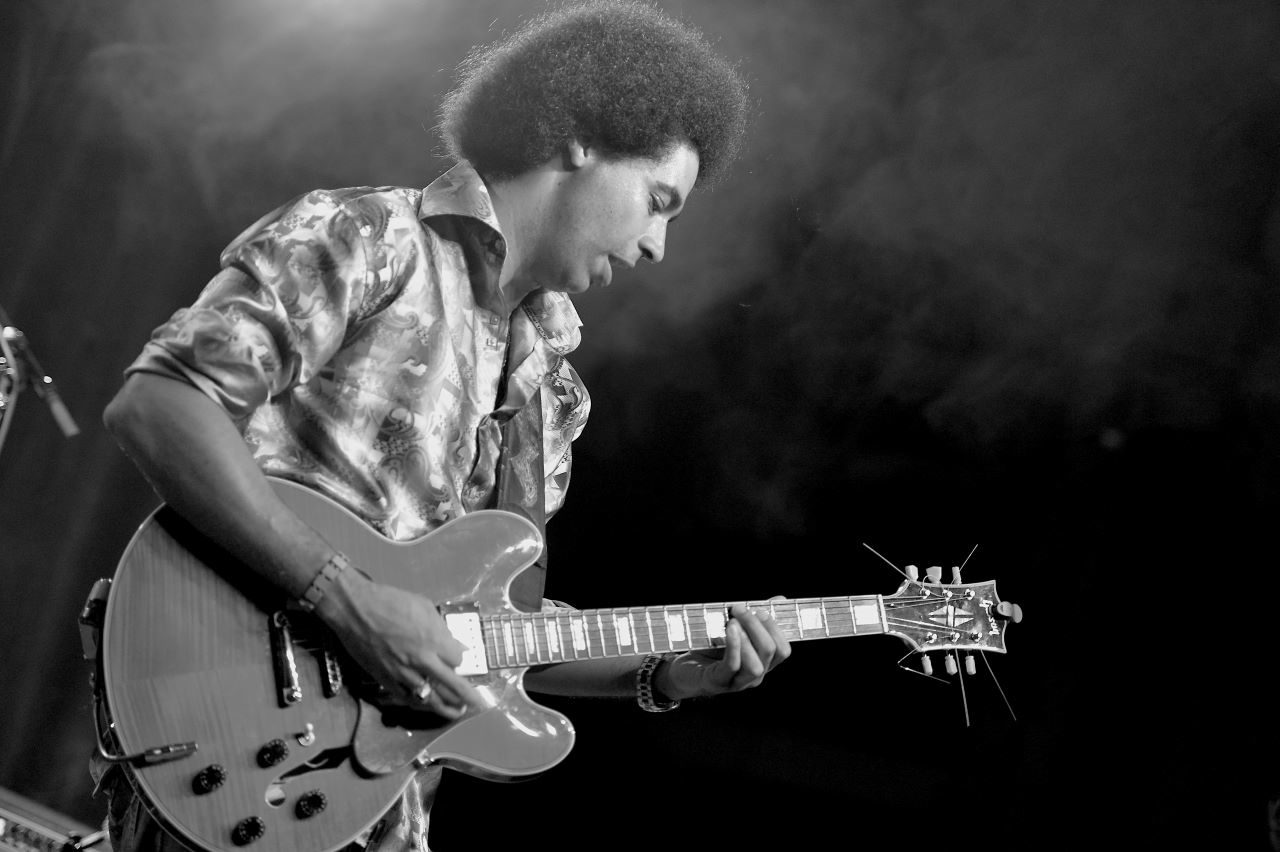
Selwyn Birchwood photo Philippe Prétet
You also have a couple of love songs that are pretty straightforward in this album, like “Labour Of Love” or “Soulmate”.
Yes, I feel like good music is supposed to make you feel something, whether it’s happy, sad, mad or glad…I think those couple of songs have a lot of heart and very relatable the audience. The goal was to write something that people would listen to and say -Oh I know exactly what he’s talking about. Music is supposed to engage you, not to be just something in the background. I didn’t relate to hip hop and people singing -I got this money and all these cars or jewelry…I was broke a hell and I didn’t want to hear somebody bragging about that. But with blues music I found songs about – I was in love with this woman that didn’t love me back or I lost this person that went off with my best friend. Or songs about getting drunk and stoned like “Champagne And Reefer”. I could relate to that kind of stuff and that’s what I try to do with my music. To make sure, whoever is listening, that you’re not alone and we’re all sharing this human experience.
How many songs did you choose from, while putting together the album?
It depends…I always tell people that if I’ve got twelve songs on a record it probably means I wrote thirty, then sent them to Alligator and Bruce only likes fifteen of them! We can put ten or twelve songs on a record so that’s how we narrowed them down. Sometimes I play songs for a year before I record them. Sometimes you get into the studio with what you think is gonna be a really good idea but it doesn’t turn out the way you wanted it or sometimes it’s the opposite. You came in with an idea that you think is nothing and then it becomes your favorite song of the album. You have to leti t breathe, it’s kinda like cooking, each time you make the recipe you might do it a little bit differently and by the time you get a year down the road it’s a completely different thing.
Taking a step back, what about the “Old School” record? Is there any reason it didn’t come out on Alligator?
Well, I thought it was a great album, but…Bruce hated it so he didn’t want to pick it up. But I thought just because one person doesn’t like it, that doesn’t mean it shouldn’t be heard. So I decided do put it out independently…I didn’t really promote it too much, I sell it on my live shows and you can still listen to it on Spotify or other streaming services. I put a lot of effort into it, I got a bunch of guys that I know, local guys here in Florida, that are really into the traditional style of blues. I’ve always liked playing with them, it allows me to flex that muscle of playing the traditional style and I don’t get to do it super often. It’s a magical thing when you’re with like minded people, like you all speak the same language.
So I said, if I book some studio time can we go in and see what we come up with? And that’s what we did. I wrote the majority of those songs while we were in the studio and I think it turned out to be a cool album. I’m actually in the process of remixing it right now and remastering the whole album. A lot of people still like the traditional sound, at the merch table I tell them, man, do you want the modern blues or the old school blues? Many people say both! It allows me to hit both sides of that fence, with my band I feel we can do both.
You had Bobby Rush on that record title track.
Yes, I wrote that song specifically for Bobby. I flew to Mississippi to have him record the vocal and harmonica to it. I even quoted one of his songs, “I Ain’t Studdin You”…everybody want to get lessons but they ain’t studdin’none…and the smile on his face! Because he tried to correct me he said it should be they have studied any. But I said, oh it’s supposed to be liker your song! And he leaned back and he had the biggest smile on his face. It was really cool. But I’m glad to keep working with Alligator, the team over there is amazing and this is my fifth album with them. I grew up listening to Alligator artists, it’s a humbling thing to see that logo at the bottom of my albums.
What’s your take on the upcoming generation of blues artists still in their twenties or early thirties?
I think the younger cats out there are just as talented as any generation before them. Kingfish, D.K. Harrell, Sean McDonald, Jontavious Willis, Dylan Triplett, Buffalo Nichols, Stephen Hull, Marquise Knox…all of them can really play and it’s awesome to watch. I’m in between generations, I was watching the guys like Kenny Neal or Bobby Rush and Buddy Guy. But there was sort of a blackout period where blues was not really visible, when I was in high school you didn’t hear blues unless you went out to find it somewhere. I went to CD stores and the blues section was this not so big…it was just hard to get them.
The with internet and Youtube the accessibility to all kinds of music all the time it allowed younger generation to latch all a lot more easy and quickly. It’s impressive how good they are at such a young age. But people are not seeking this stuff out, we need to get on the road and bring it to people. But I would not have it any other way. I like to play live in front of an audience and share the music with them. I try my best to keep writing songs so that every time you hear me live you are gonna hear something new. There’s no short cuts around it. And I surely hope we can come back to Italy someday, we had such a blast the last time, a couple of years ago.
Do you think the success of a movie like “Sinners” will be helpful for the blues?
Yes, because you don’t see this music in the mainstream that often and when you see it in something that was not only mainstream but such a massive hit, it can be nothing but good!
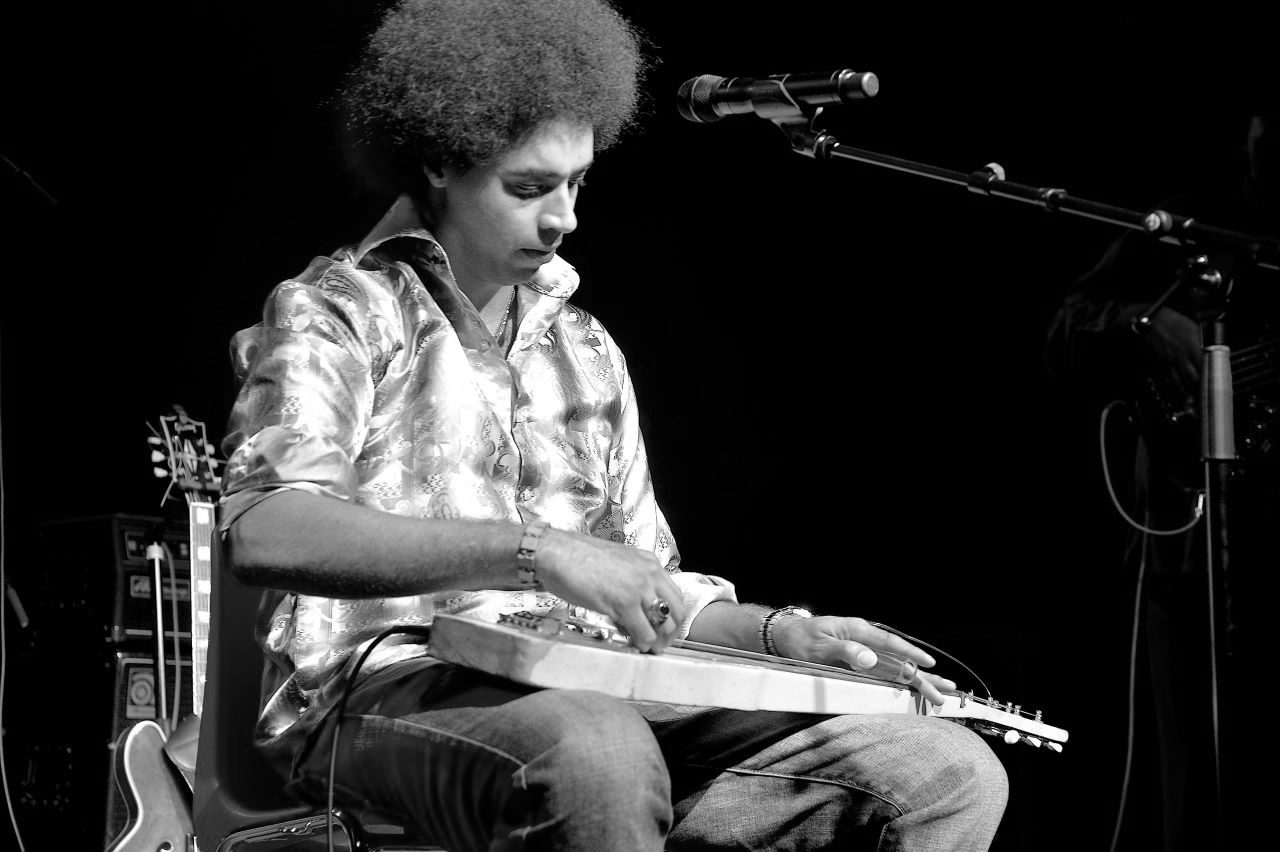
Selwyn Birchwood photo Philippe Prétet







Comments are closed