

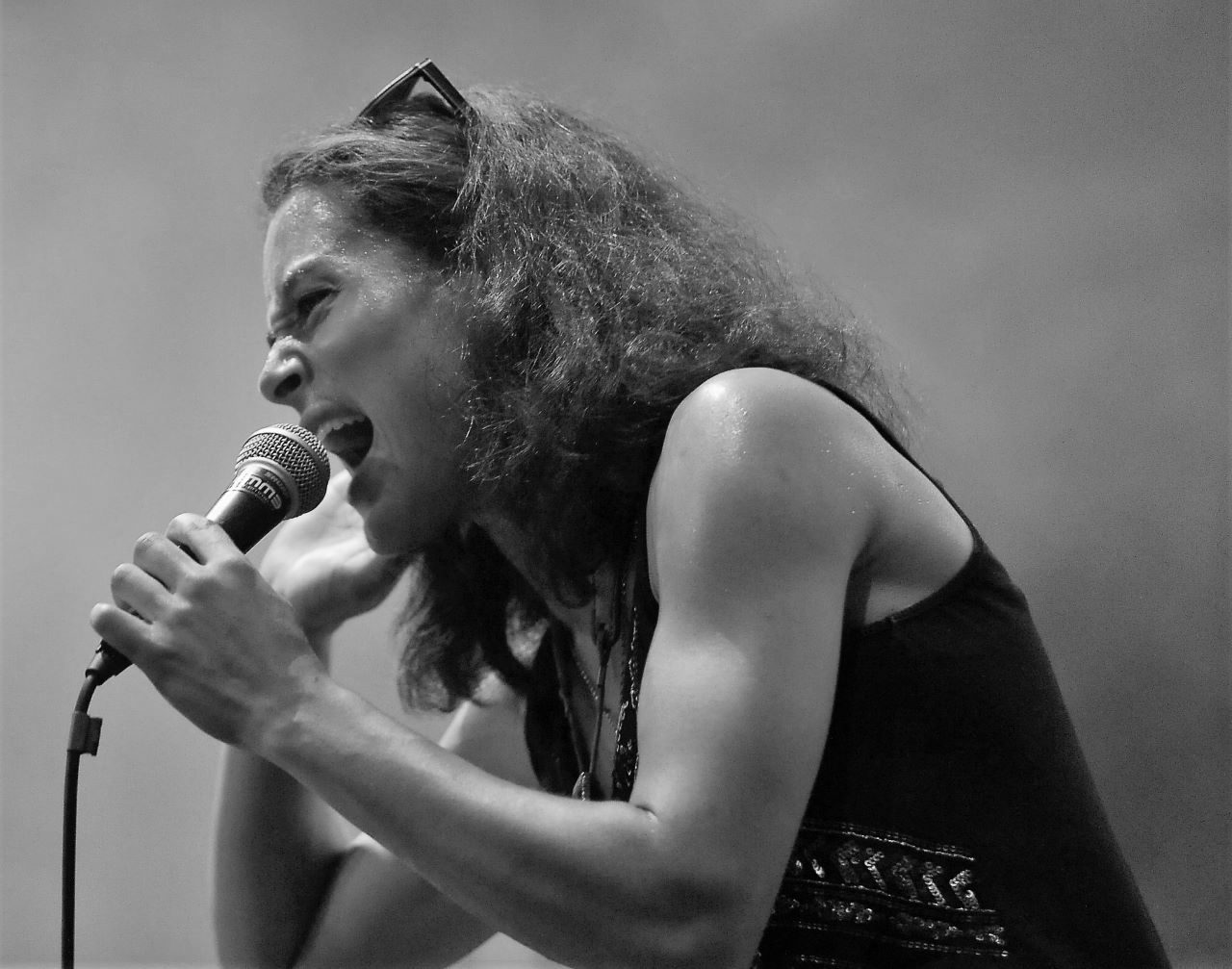
My own way
by Matteo Bossi
A very talented singer, songwriter, saxophone and guitar player, Vanessa Collier has made a name for herself in little more than a decade and she did it on her own terms, putting out five solid, eclectic studio album and a Live one. Anybody who has had the chance to be at one of her gigs witnessed a dynamic and fearless performer, leading a versatile band with partners such as the esteemed guitarist Laura Chavez.
Their set was one of the highlights of the last Lucerne Blues Festival and so we catched up with her after that event to learn more about her singular journey in both music and life, looking forward to see her again in Italy on the Blue Note’s stage in january.
Do you look back at your beginnings sometimes? Your first record came out 12 years ago.
Some things pop up every now and again, somebody plays Pandora and stuff from my first record came on…and I was: wow! I was so young and I had no idea what’s coming. And I still love those records. A record is a statement of where you are in time, you can look back and judge it based on that. It’s just as beautiful as anything you can make, you know what I mean. It’s cool to see the growth from record one to record six that I put out last year, both as a vocalist, now I have so many options to tap into that I didn’t have when I was younger, and saxophone wise even, it’s like I’ve found my voice, not just continuing to search, because I am, but I was stuck with the things that I was going for at the beginning and now it’s become more full flourished ideas.
You started out playing saxophone when your were just a nine years old kid, what did you like about it at first?
I was grabbed by the sound of it! And a lot of people who play saxophone they have similar stories, like there was something about that sound that drew me in. That was definitely me. I heard it in a Tv show and I was: what is that?! How do I play that, that’s amazing! And I was really fortunate to have a lot of good opportunities when I was young. Our music programs through elementary, middle and high school were super high level, everybody supported the arts. It wasn’t like, oh you’re not playing a sport, which I was, I played basketball. Sometime people are like – why are you wasting your time with music, you’re not going to go anywhere with that…- but that was not my case. My mom totally encouraged me to do all the things and she made it possible. And then she got me saxophone lessons with a guy who played clarinet in a army band, after a year and a half he said you’ve outgrown my saxophone knowledge you need to find another teacher. It was amazing to say that, if I think about it now.
Then I had the chance to study with Chris Vadala, who played with Chuck Mangione for twenty plus years and was the first call in the D.C. metro area where we lived. So when B.B. King came in town or Aretha Franklin…he played with all of those cats. I studied with him for seven years and I didn’t know you could do music as a career. I took an audition with him when I was in sixth grade, because my middle school band director heard me and he said, hey Chris you got to hear this kid. And so Mr. Vadala he took me and he said, I usually don’t take anybody under high school, they don’t have the focus, the drive and the skill leve…I learned so much under his tutelage. He wanted me to be technically proficient and he never limited my expression. That’s one thing I’m still grateful for. When I went to summer camps like Eastman, University of Miami and even going to Berklee they try to get you do all these thins with the harmony and I wasn’t ready for that information yet, I was still finding my voice and I didn’t care if I made a wrong note or didn’t make the change. But Chris encouraged me to be myself.
…it’s a journey and to each their own
I think it’s very important especially in your formative years.
Oh totally. That’s how I teach to. I don’t want to limit someone by saying: you got to follow these rules right from the beginning. I think that especially in music but in life too there are a lot of things you find on your own. The more you have rules the more you hate it. If you give someone a framework and the freedom to find their own way withing that framework then you can take them to the next step and add this or that thing. That’s how I think music should be thaught but sometimes there are rules first and no fun, no expression… and this is important because if you’re a musician you’re the only one who can say those things in that way. And that’s what you see when you think of all the musicians that have changed the face of music. In the jazz world take Miles Davis, who said -no I’m not gonna play all those notes, just one – he changed a lot, from the Birth Of The Cool to Bitches Brew…you don’t have to stick to one thing. Take James Brown, nobody had played on one chord for that long before or Prince or Bob Dylan…it’s a journey and to each their own.
So I guess even as a music lover your taste was very eclectic from a very young age.
Yes, I was very fortunate to grow up in the household that I did…we listened to Nineties pop, Aretha, Ray Charles, The Eagles, Fleetwood Mac, Toto, Willie Nelson…everything. Kudos to my mom! She’s that way, it’s her love of music is what created my love of music. It does often get passed from the family. I feel very lucky to have all these influences and to still find music that I like out of nowhere, like: how did I not know about this? It happened to me with a Hank Mobley record a couple of years ago.
And you can find saxophone players in jazz, rhythm and blues, funk, rock…a lot of different styles.
That’s why I always say that saxophone fits everywhere…think of Bruce Springsteen, Clarence Clemons was a huge staple of his sound. Across the board Ray Charles played saxophone on some of his stuff…it’s a voice that’s there, not always at the forefront, the Junior Walker style disappeared for a bit but it’s been there because it’s such a soulful instrument and people connect to it. It’s very visceral and cool.
Even in Chicago blues you had players like Eddie Shaw or A.C. Reed, it’s very eclectic.
Yes, and plus anybody that picks up an instrument is trying to emulate a different instrument…the Chicago thing, that’s my two cents at least, having electrified blues and with the likes of Eddie Harris and the baritone thing they were trying in a way to electrify the saxophone because the guitar is so huge the saxophone is trying to play like a guitar. And that was my approach, like guitar is cool but saxophone is cooler! They had this overdriven distorted sound, how do I get that? I thought. I was trying to get my overtones and all that stuff. When you’re a musician you try to push your instrument to the limit. You think: how can I play like a harmonica player or a guitar player? And you learn different licks because every instrument has its own ergonomic things that people fall into.
Even someone like Derek Trucks listened to a lot of horn players, especially saxophones and trumpets…
Yes, absolutely an I love that, I think that’s what separete you often times, if you take an instrument that’s usually played one way and you tweek it just a little bit…And I know he has listened to Sun Ra and a lot of indian classical music too, so nobody plays like him. Unless you’re trying to emulate him! He’s the first one that I know to play it that way.
Her training and Education
You pursued music education at Berklee, what was it like to have a more academic approach compared to the freedom you experienced with Chris Vadala?
It was very different. I would say think saxophone wise I struggled through four years at Berklee. I came in and I tested really high on improvisation stuff and whatever…and I ended in kind of no man’s land, everybody expected me to love jazz and play jazz, which I did…but playing a 12 bar blues light me up more than playing like Charlie Parker. I wasn’t gravitating towards it. But when you play alto and you go to school you should have all the Birds stuff… there were a couple of teachers that changed my tone a bit, I think through chord changes in a different way…all of this was helpful, but I didn’t feel like I came out of it like Ok, I know exactly what I’m doing, I feel like a better player. I felt the opposite. I’ve found that I like to learn with other people, bits at a time and be guided through education, it took me a while to find a teacher that could do that for me.
I met this guy, Marco Pignataro, by complete chance, my teacher was out with a shoulder injury and Marco was like, “oh no, you don’t have to change the way you play at all! Just think now you’re painting with more primary colors maybe, so you got some reds and blues and yellows and maybe some green here and there. But I want lilacs or cerulean and here’s how you get there.” So this was what I needed. Taking a student where they are and add, like you’ve got this great foundation rather than crushing you at the beginning. He was super helpful for me. What I liked about Berklee is you’re surrounded by great musicians. And I was such a shy player I downplayed everything so seeing people that came out of their shells and played everything that they knew was really important to see. And my last year of high school there was a music technology class that I took, it was one hour and a half we learned about EQ, filters, mixing a record, how to master a record and I had no idea about any of it but it was very helpful. I didn’t come from a technical world but I was really intrigued by all of this stuff. Then I landed at Berklee where they had a music production degree – what’s that about? I thought. And because of that class I tested out of the music technology basic so I didn’t have to take that first year at all. And I did major in performance and music production so I’ve used a lot of that education.
You produced most of your records.
Yes, I’ve been a producer for all of them and a co-producer on my second one. I continue to learn and grow in those areas so that I can make my records better and my live shows better. It’s all interdependent. I was grateful for those four years, it opened so many doors for me. I think the point of going to Berklee was not saying- OK, I’ve come out a completely polished, finished musician, but now I have all these avenues that I can go to. I’ve learned drums, piano, bass, guitar…and I have not written a song prior to college. I wrote poetry. But I took some songwriting classes.
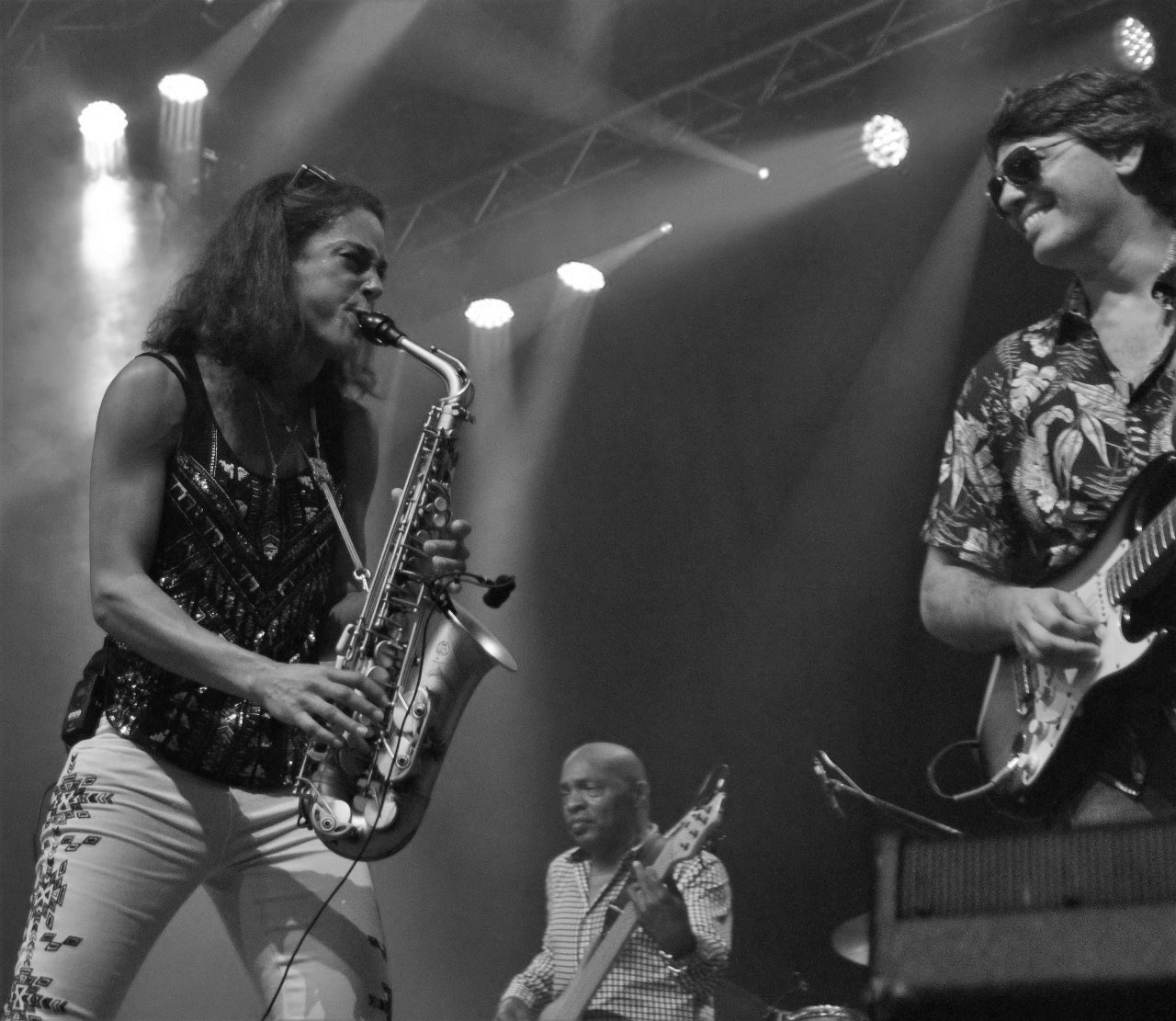
Vanessa Collier Lugano foto Gianfranco Skala
And one of your teachers was Livingston Taylor.
Oh you’ve done your homework! Yes I took two of his classes and again I was very quiet in his class, I didn’t show everything I was capable of. But the little things that he told us, he talked about nervousness as being selfish, I’ve always liked this one. I used to get super nervous before a performance and he said, if you get nervous It doesn’t allow the audience to connect with you, you become so internal that you can’t give out anything. He said-sure, you’re gonna be nervous, it means you care but you gotta step out of that. These little things. Like the eye contact thing, he talked about delivering a line directly to a person, you look in their face and you finish the line, then you go on and move to somebody else. I’m not really conscious of doing these things anymore but when I started it was a good way for me to get out of the bubble. It became about connection. It’s a good thing to reshape public performance in that way. And don’t even think I knew he was James Taylor’s brother until halfway through the class, but he talked about James playing and his sister’s as well. And in New England he’s so well known, he plays all over the place.
While you were at Berklee did you play a lot with your classmates?
I was super introverted, I went to one jam…but that scared me when I was in college. I would practice a lot by myself for the first few years. Then I thought I needed to find band members or friends. I started playing on this singer showcase, they have one single band and like ten singers, it happens every fall and every spring. You play charts. I got selected to be in that band and a couple of other things. Like Patrice Rushen came through so I did a session with her, Kathy Mattea, a country singer, came and we did a week of rehearsals and a show…things like that slowly I got pulled into.
The beginnings of her career
Then you got the chance to play with the late Joe Louis Walker.
It happened because a buddy of mine, who plays drums with me, we were friends and he said -oh I’m playing with this guy, Joe Louis Walker, you should totally come out-. It was during the summer and they were rolling through Philadelphia where I lived at the time. – We’re playing this place called the Warm Daddy and Joe loves to have people up and sit in…So I listened to him on Spotify and I said-wow this is my stuff, I can totally do this and I played saxophone along with his records…So I went and I sat in that night. I met him on the break, they were doing two sets, he said, we’ll get you up there and then when he comes back he said, are you coming? I grabbed my saxophone and went along. I can’t remember what key it was. It’s customary to stay up for two songs then the graceful thing is to walk off the stage…
So I started to walk out and he said, where are you going? Stay up here! So I ended up staying the whole second set. After the show he was like -hey, do you wanna go on the road? And i said -Yes, call me anytime. That’s how it was. I started playing all the East coast dates with him, we did one in Oklahoma and then the three days festival the Tedeschi Trucks do in Florida. I toured one year and a half with Joe, finishing with a month long tour, a most amazing tour, in Turkey. That’s how I got my feet wet and how I knew I wanted to do this…it was only a couple of month that I started to write my own material, getting covers together, putting a band together and getting my own career. I’m grateful for the time with Joe.
Joe was a very eclectic musician, from gospel to R&B, to acoustic blues and rock…
Yes, I think that’s why I gravitated to Joe, the reason why I’m most thankful is because he was not any one thing, he was many things at once, he was an example for me. He’s in the blues world, but he’s got a foot in the gospel, in the funk stuff, we do blues rock…all in one 90 minuets set. A lot of people do the same, like a shuffle in different keys or different tempos, but shuffles; which is amazing, but it’s just another journey. And there were no limits for Joe. He didn’t limit me as a player, he let that happen and there are not many artists who are going to let their sidemen breathe like that. He was such an encyclopedia of the music and its history, I’ve learned so much from him. He sent me home with records and books like The House That Trane Built…
When I graduated to college Joe said-I’m gonna take you to see The Stones. He knows Mick Jagger quite well. So he and his wife took me and we sat in like the fifth row on the floor with Mick Jagger right there! It was the loudest concert I’ve ever been to, then or since, but a great memory! I always say that Joe was my master degree. I’ve learned a lot especially on playing. There are different opening of mouthpieces, with a more open you tend to have a little more projection and I had this closed, almost classical mouthpiece and I played with Joe and I could not get loud enough, but I was blowing so hard that I’m popping blood vessels in my face! I knew he had heart surgery but he was back out playing…it was a big loss for me and my drummer Byron played with him too.
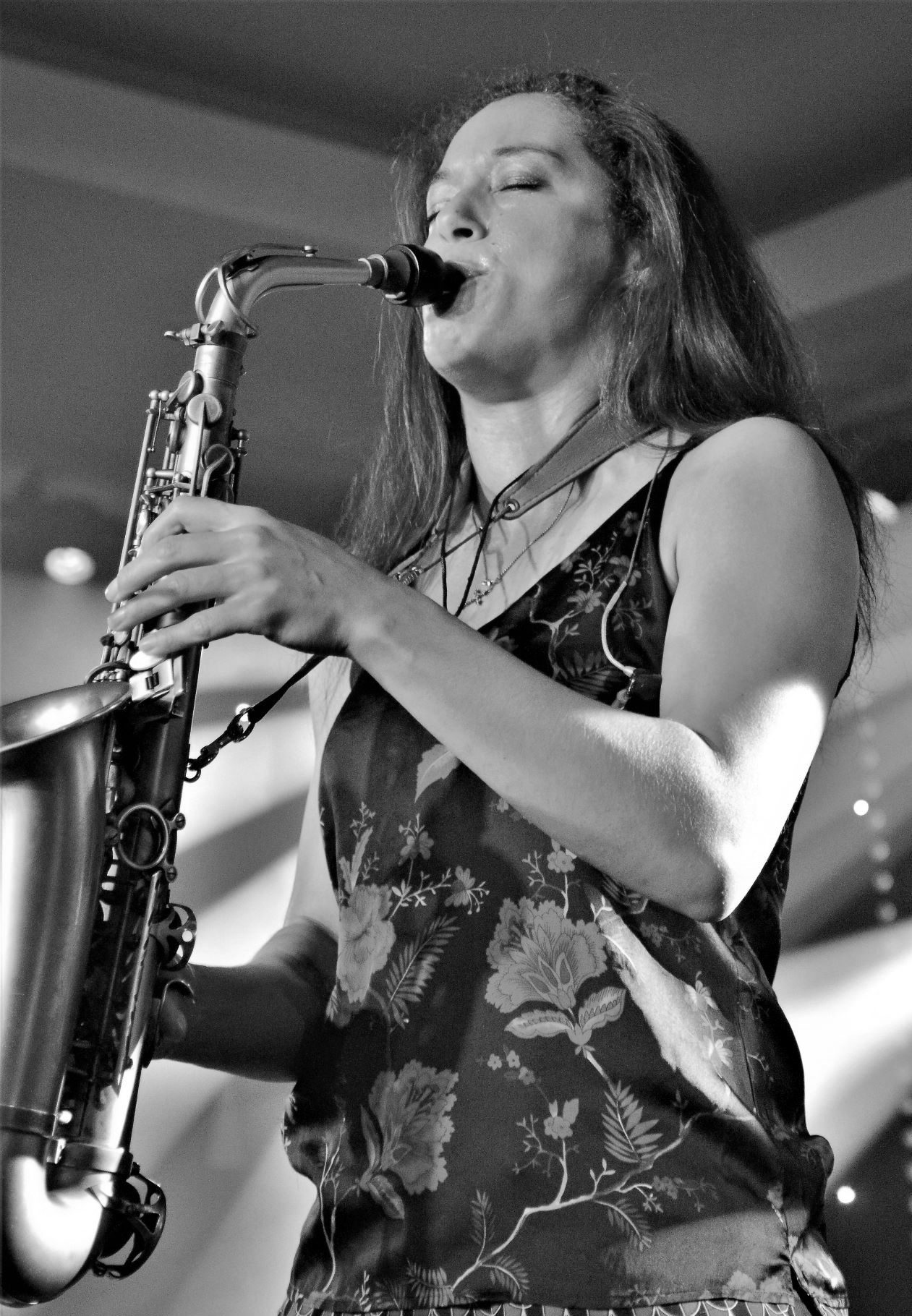
Vanessa Collier Lucerna foto Gianfranco Skala
For all of your records, except the one you did with Ruf, you chose the independent way.
Yes, both have their downsize. Obviously I’ve been doing it independently and what I’m finding is that even as my career continues to grow it’s still hard to sell records, the distribution… because you’re not a record label that’s putting out several records through the year, but one person who puts out a record every two years. The record label has a machine…but for me I’m fiercely independent and very stubborn, I’m open to other people opinions but now I’ve learned that those people don’t walk in my shoes. I felt that the process making with a record label is kind of antiquated, I don’t want to be seen as a female artist making a record,but hey this is a badass musician making a record, that’s the only important part.
The whole idea that I have to appear in a certain way or the pictures be in a certain way…plus you’re the artist, the songwriter and without the songs there’s nothing to promote and sometimes record labels try to take sources of revenue from you, a percentage of the copyrights, the masters…I mean we’ve learned that from Prince. Still sometimes they have more connections and you sacrifice certain things, but I really wanted to make the record the way I heard it in my head, not having someone up the chain approve the music, the production values or the pictures. I feel very strongly about doing it on my way and see what happens, it makes me happier. That’s been my main thing. That’s why I haven’t done a record with a label.
“Meeting My Shadow” came out on Ruf and you had Laura Chavez on it, who is still playing often with you both on stage and in the studio.
That’s the beautiful thing it is a community, that record helped me step into the community more fully. I don’t think I would have run across Laura, we ran in different circles, so I’m grateful because our musical connection is totally cool, it’s inexplicable, it’s not something we’ve ever worked on. That’s why I’ve continued to make records with her. And it speaks to her as a human being, she’s very kindhearted and open, she listens, very knowledgeable, she’s one of the smartest people I have ever known. It all comes out in her playing and how she approaches music. So I’m thankful for that record, I learned so much, it’s not about the experience itself was positive or negative, I got the education that I needed. I got to meet and play with Laura or TK Jackson who plays drums with Southern Avenue…We just saw Debbie Davies on the West coast or Dennis Gruenling the harp player, and to be among these people who at the beginning I’d go see and think oh they’re killing it and now they’re coming to my gig or I’m going to theirs. It’s all about community.
I’ve read you had plans to make an acoustic record with Laura Chavez.
Yes, you know we’ve talked about that. The pandemic showed us a lot of things. I’ve been fortunate also to meet Arthur Neilson from Shemekia’s band, we did duo shows throughout the pandemic, that’s what kept us going, playing these outdoor socially distanced events. I also played with Chris Vitarello who played with Bruce Katz for ten years as well as Mike Schermer who played with everybody, especially Marcia Ball. So I’ve got all these great guitar players and they all come at music each in a slightly different way and doing duo shows with them that was the spark for the record. I could make a record just with Laura but also with see how it weaves with some of my favorite guitar players. So at some point that will happen. I’ve always wanted to co-write a record with Laura but to do it we should be in a similar space and time, she’s always busy and I’m always busy…but I hope it happens it would be cool. There are like eighteen projects in my head at any given time!
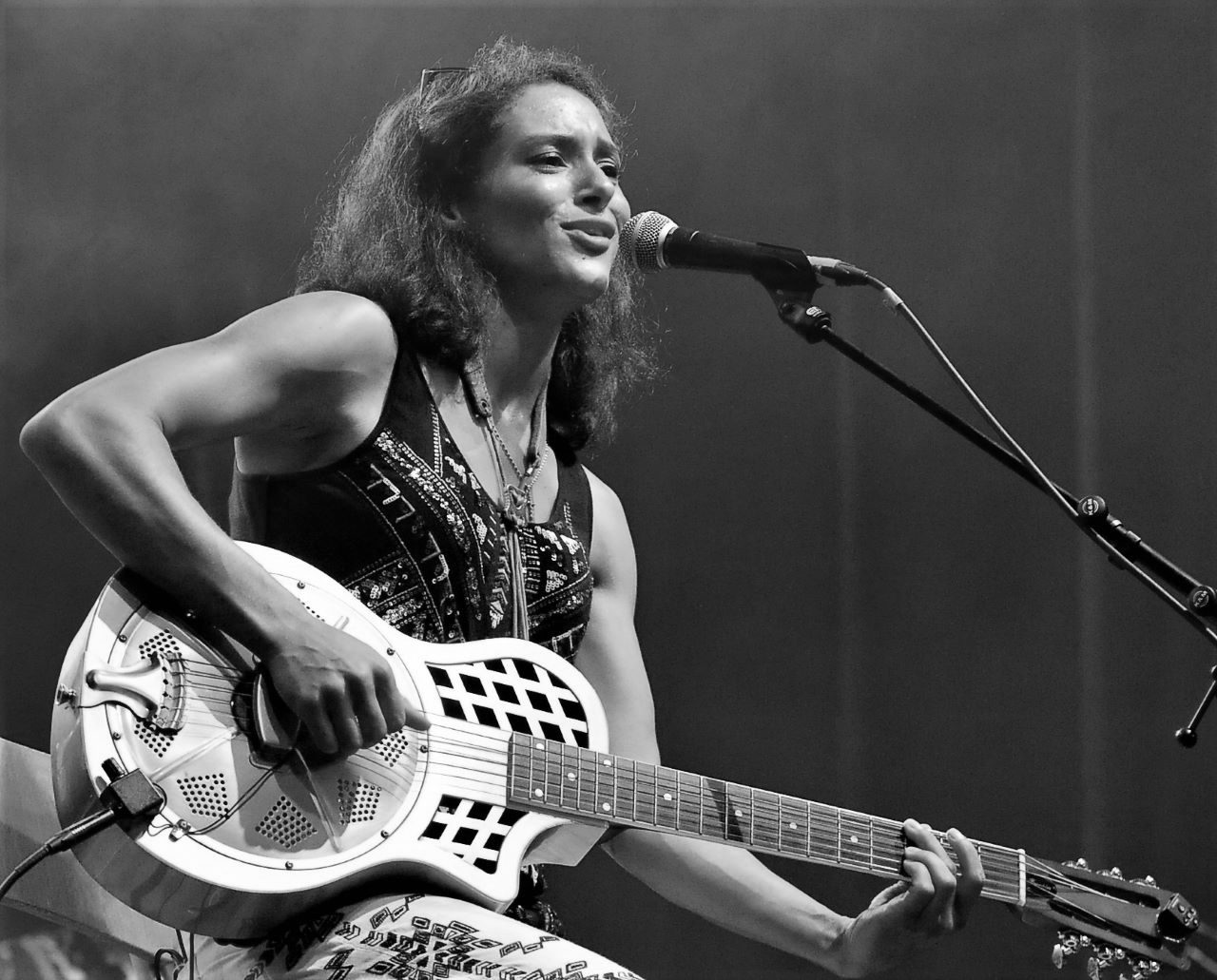
Vanessa Collier Lugano 2019 foto Gianfranco Skala
As for your songwriting you can take it in different directions, is it still a learning process too?
Yes, I love psychology, how people think and how it comes out in the world, and my brain loves that kind of mechanical engineering thing, take things apart, figure how they work and put them back together and see if they still work. And songwriting is like that for me, it is like alright you have three verses to get from here to here and each verse has to mean more. And it becomes like puzzle, you have these pieces and you have to constantly edit and edit. I can’t remember who said that songs are never finished and in that way it’s so freeing, it doesn’t have to come out perfect, you can always figure out what are the missing pieces or how to make it stronger. When we go into the studio no one has hear the song but me and we’re cutting them in two or three days and that’s it. Live it’s different, we feel this song needs more room to breathe, let’s extend the opening or the solo section a little bit…that’s why I put out a Live record, those songs after so long just morphed into other things.
How do you set out to make a record, there has to be a concept that ties the songs? Or is it the other way around?
Oh it’s interesting, I love Prince’s approach to that. I’ve read this recently and it makes so much sense he said I don’t want to be out on the road for an entire year because that’s just performing stuff that I thought already…but that’s being an entertainer not necessarily being an artist. You have to think about new material. And I love that because I never know what the next record is gonna be, of course I have this idea of the duo record but it has to feel right and the songs have to take you in that direction, that’s what dictates everything. The first record was like, oh these are my favorite songs, let’s put them on a record.
The second was intentional, I was going through a tough time and the whole record was me coming out of it. “Do It My Own Way” I wanted to write something more soulful, even though there are blues progressions in there, it’s just a different vibe. I wanted to do a soul/funky record kind of a Daptone and Memphis soul…I wrote with that in mind. But the next record I feel it’s gonna be totally different, I don’t know yet. I haven’t sit down and write demos. But I have never thought this record would get nominated in the blues category at all, because it got the contemporary blues album of the year nomination. It’s amazing, I’m glad they recognized the roots. I like spacing out the albums, you can’t put out music every four/six weeks, how can you grow as a person? There’s no significant change. I tend to do albums every two/three years to figure out who I am in that snapshot of time.
Is there any music you’re listening to that maybe you were not familiar with before?
Yes, I’d say most recently it was Tina Turner. They released this documentary and I watched it while I was doing these gigs. I knew some of her songs but I didn’t realize the struggle to get to be the rock star that she was. I knew the stuff with Ike, I didn’t know he gave her the name Tina and before her rock thing she was doing country, soul…I got to dig into her catalog a little bit more. As well as Aretha, she’s someone who you know the big hits and stuff but discovering the records is interesting, I came across a live album she did in France…my partner and I we love going to record stores. He’s go me into Hermanos Gutierrez and also into the african music, like the Fela Kuti stuff…the more varied you are the more ideas come to you.




Comments are closed