

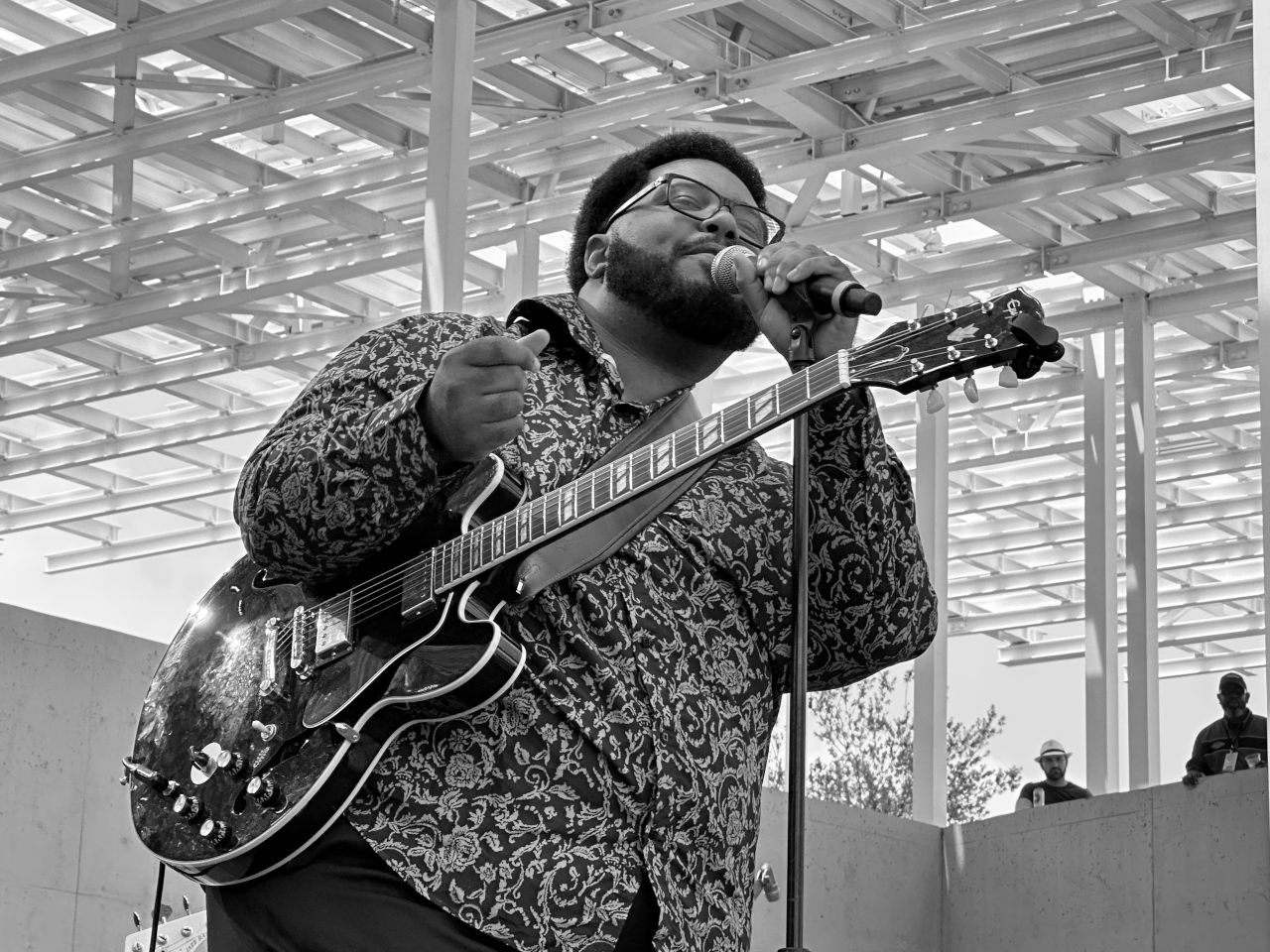
Saturday night, backstage at Antone’s in Austin, and stopping here alone would be enough to make the day memorable.
And yet, after the first day of the Austin Blues Festival, and a small talk with a smiling and very helpful Gary Clark Jr., I’m sitting in the dressing room with D.K. Harrell, who a few minutes ago set Antone’s on fire after literally turning Austin’s Moody Amphitheater upside down this afternoon.
He’d have enough to be exhausted and seek peace and quiet, but instead, after giving each fan time and attention at the merchandise stand (photos, small talk, autographs for everyone, no exceptions—just as he did in the afternoon), he invites me to a seat and enthusiastically grants me his time for what, less of an interview than a chat, turns out to be less about music than one might expect, and more about life itself. Although perhaps, on second thought, music and life aren’t such distant subjects.
First of all, thank you for your time and congratulations on all the nominations and awards you’ve received, so well deserved, and for your two truly killer albums. I’ve read about your main influences—the three Kings, Koko Taylor—but I’ve also found a lot more in your music: funk, gospel, soul. How do you manage to blend it all together?
First, I tried to personalize my funky attitude, which comes from James Brown, Parliament Funkadelic, and the Ohio Players. Usually, when people talk about funky influences in the blues, the first name that comes to mind is Albert Collins, but I also think of Freddie King’s later years, and even B.B. King and Albert King themselves have something funky in their blues.My method is what I learned from those three: I try to sound like a bluesman, both in terms of sound and phrasing, but the music around me can have other influences. In other words, it’s like taking a country musician and saying, “Hey, I know you play country, but I’d like you to play a country solo in a gospel song!”
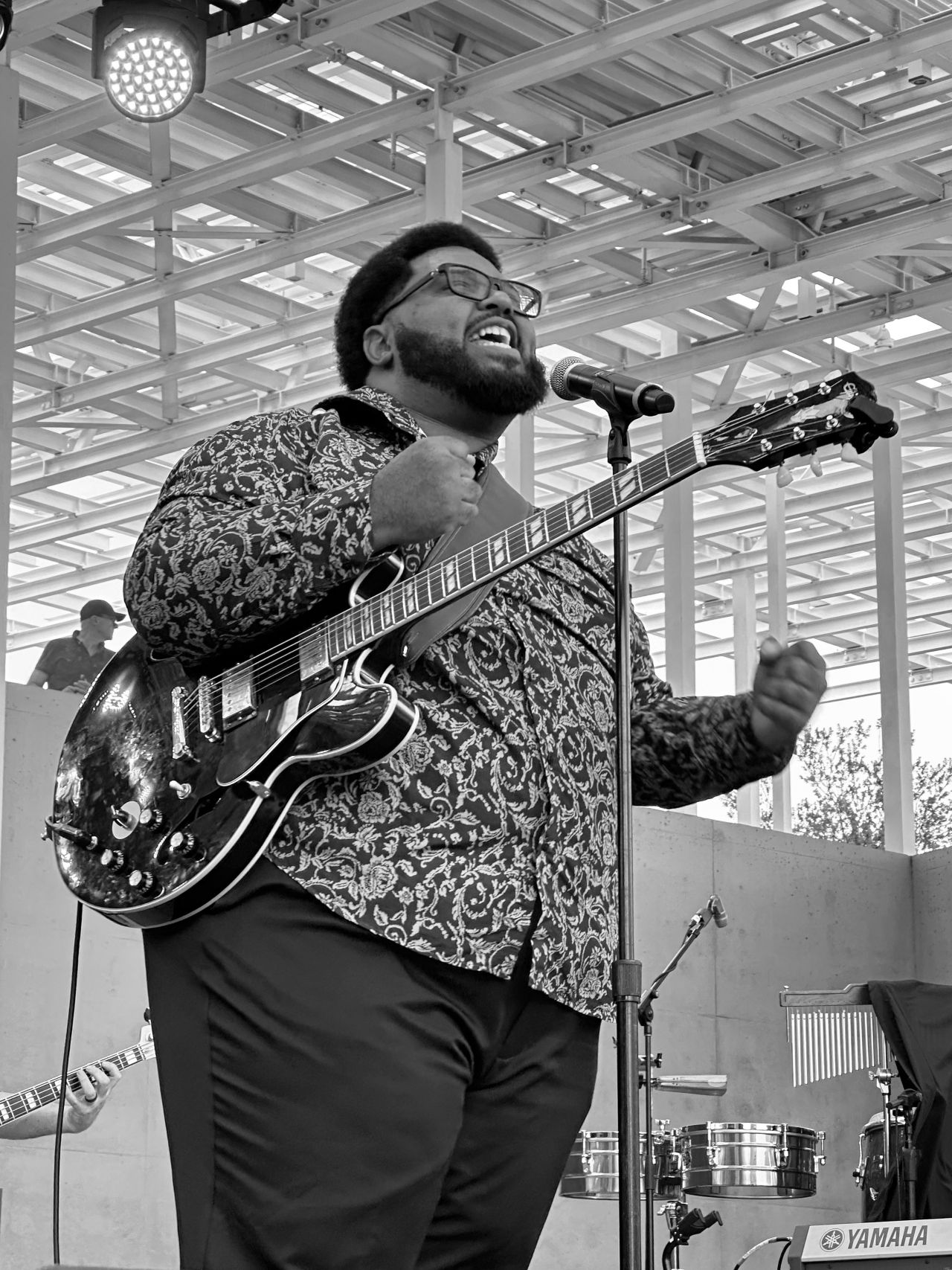
D.K. Harrell – Austin Blues Festival – Foto di Daniele Tenca
So, if I understand correctly, you start with the sound and the phrasing, and then you build chords, harmonies, and melodies around that, with different influences. It’s a great recipe, because everything works great, very naturally, with a completely spontaneous flow.
And indeed it is! I try to be very vulnerable in front of the audience, and very attentive and sensitive to what’s in front of me. There are many artists who put on a show but don’t connect with the audience, I’ve seen it many times. They might put on great shows, but then they leave without meeting the audience, without connecting with them. I want to be among the people when I’m on stage, but also when I leave after the concert; I don’t feel and don’t want to feel like Superman with a guitar, but a human being like those who came to see me. Only in this way do I feel comfortable and can be myself. For me, that’s what making music means.
As a musician, I understand you completely. If you don’t reduce the distance between yourself and the audience, you end up playing only for yourself, whereas music is first and foremost communication, a connection of values, ideals, and feelings.
Correct! Then, in a certain sense, I play for myself, because I love what I do, I love playing, and I really like what comes out when I play, but I feel much better when I see that people are happy when I play, that people like what I play. So, if we put it in percentages, 10% I play for myself, 90% for the people. Because people come to see you, they want to have fun, they want to feel loved, appreciated, and you can’t be a robot on stage; you have to show them your human side, you have to show them who you really are.
One of the things that struck me most about watching you play is that it doesn’t matter if what you’re singing is sad or happy, what you convey is joy. And that’s an incredible lesson, not only for the people who come to listen to you, but also for the musicians who see your show, because extracting beauty and joy even from sad things isn’t that easy, and it’s a kind of attitude and energy that’s not easily found around.
I try to explain this to people like this: you shouldn’t cry listening to a sad song, because whatever song it is, it’s wonderful to sing it and play it with a smile, because in any case you learned something from that song, it made you grow as a person, and you accepted whatever came to you from that experience, and you say, “Hey, it’s okay! I’m fine!”, or “Yes, it’s true, she treated me badly, I felt bad about it, it broke my heart, ‘Honey Ain’t sweet,’ but I’m over it, I’m beyond it.” It’s true, we didn’t ask for it, it happened to us, but we learned from what happened to us, and troubles don’t last forever. The only way to make them last is if you allow them to cling to you. So, forgive yourself and move on.
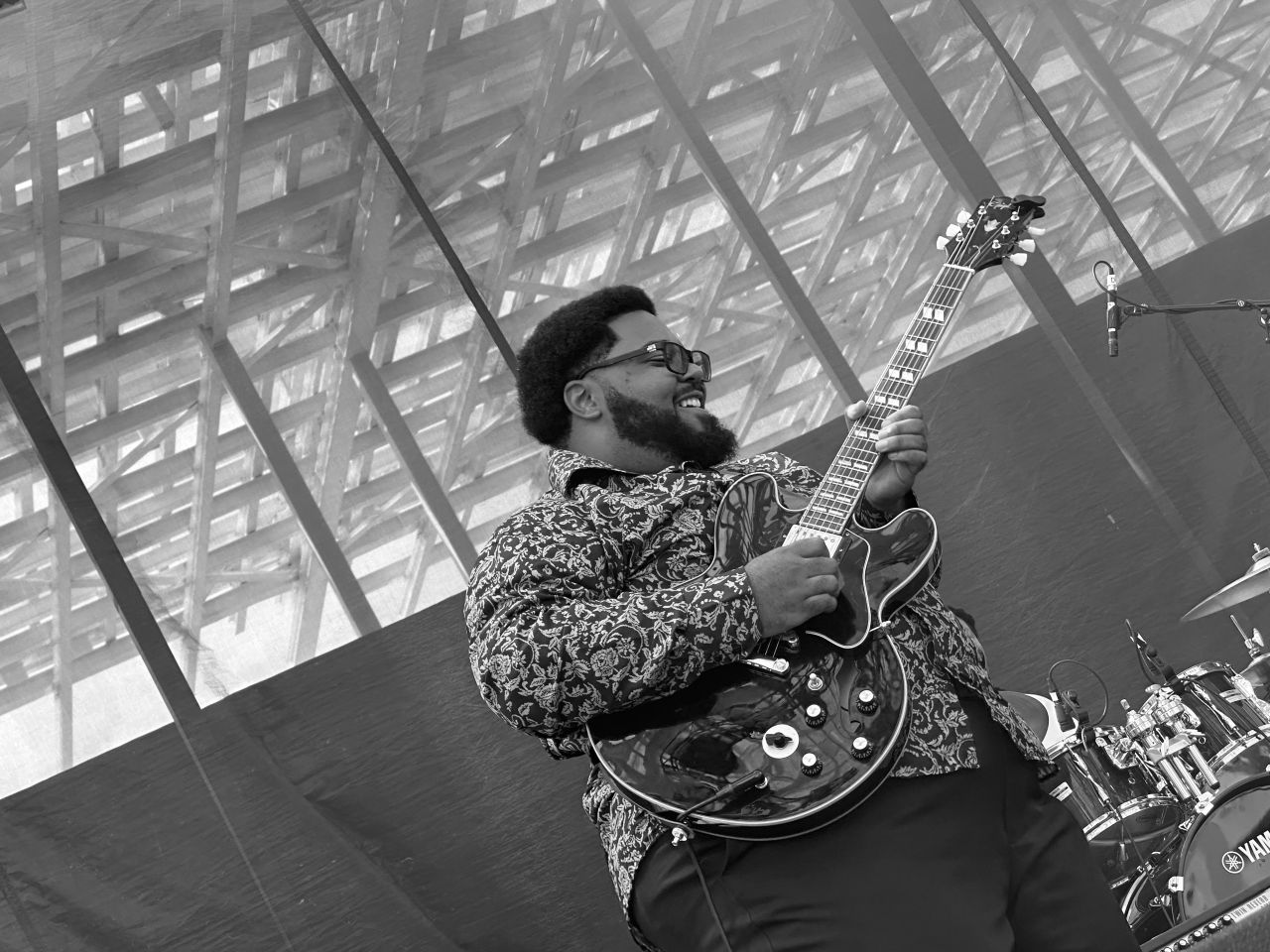
D. K. Harrell – Austin Blues Festival – Foto di Daniele Tenca
You turned 28 a few days ago, but you speak with the awareness of a fifty-year-old. I know you’ve been through a lot…
True, I’ve been through a lot, and it’s not just being homeless for a while…
…but your awareness and the balance you’ve achieved are evident in the way you hold yourself on stage, how you manage the show, the band, the audience. Speaking of which, how much of James Brown (he starts laughing…) is there even in the more “physical” part of your show?
Well, I want to be honest with you, when I was a teenager I played the part of James Brown, you can even find something on YouTube… I did like twenty or thirty splits a day, I spent more or less three and a half years listening to and watching James Brown, I studied him a lot and took what inspired me the most… the beautiful thing is that I tried to become a kind of Frankenstein who put together all the great artists who inspired me, and when people say to me “you remind me of this artist or that one” and they are all phenomenal artists, well, it means I’m doing my job well!
Oh, no doubt about it! Going back to James Brown, it seems like you’ve taken the most “humble” side of James Brown—no leopard coats or royal crowns, just the “Hey, I’m here to entertain you” attitude. He was one of the greatest stage performer ever to exist…and what comes from that is that you remain “real” and credible.
I always say I could never sing or play a song I don’t like or that I don’t identify with. There are artists who, once signed to a label, are “guided” by the label on what to sing; I could never do that, because if I don’t “feel” what I’m singing, it doesn’t work. If my heart and soul don’t feel what I’m singing, I feel like I’m fooling the audience if I do it.
So, to sum up…you’ve signed to Alligator, awards, nominations, Antone’s, Austin Blues Festival…and now?
Well, very simple…there’s still a lot of work to be done! Many people have a bucket list of everything they want to do before they die; mine isn’t really a list, in the sense that when I was a teenager I had wishes, but I never thought things should happen at a particular moment. I always thought that time would decide when, accepting everything as a blessing. Many artists can’t wait to win a Grammy, okay, and then…? There’s still a lot of work to do, because the goal can’t be the Grammys, but to have the privilege of being able to craft something from nothing like a song for as long as possible, which is a true blessing, which I truly hope never fades, and to receive all the love possible from that.If after winning a Grammy an artist said goodbye to everyone and retired, do you know what people would say? “Ah, but then he only played to win Grammys!” And so you destroy all the work you’ve done in an instant.
Lastly…when you’ll come to play in Italy?
Good question. We’ll be in Sardinia, if I’m not mistaken, the last weekend of July, and then I don’t think we’ll see each other in your area for a while, unfortunately… I love Italy, also for “matters of the heart.” I adore your cuisine and especially your wine, but I’m crazy about chicken “alla diavola”! I’ll see you all in Sardinia!
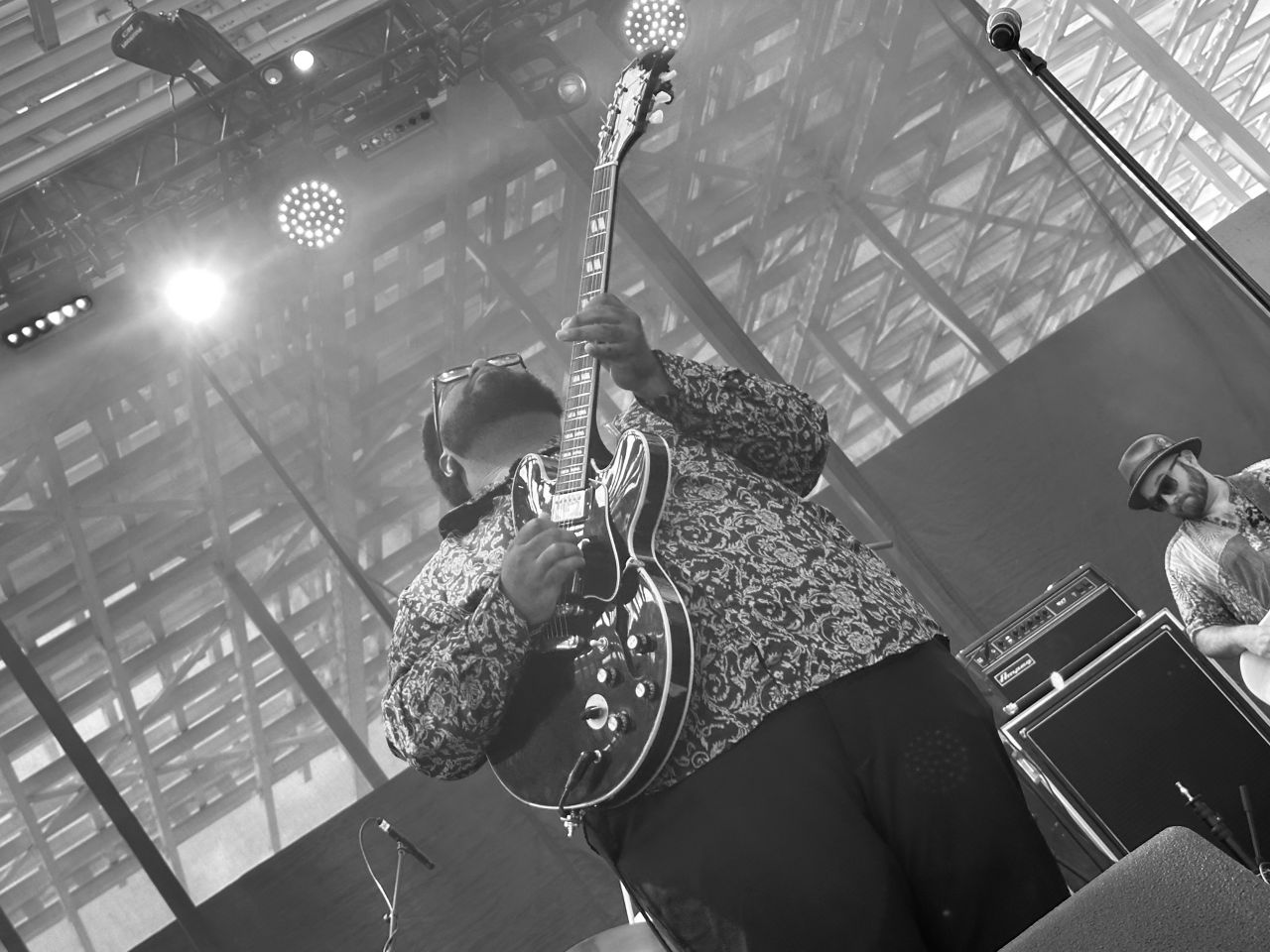
D. K. Harrell – Austin Blues Festival – Foto di Daniele Tenca
A warm hug closes the chat and the meeting, while Orlando Harry and Ruffin Jackson, the band’s keyboardist and drummer, literally collapse on the couch. The hope is to see each other again soon. For now, I can only be grateful to have met a wise man in the body of a young twenty-eight-year-old, with fire in his hands, but above all in his heart and soul, who, for the person he is, deserves the best, not just in music. One final side note… about ten days after this interview, DK Harrell took home both Blues Music Awards he’d been nominated for, “Best Contemporary Blues Album” and “Album of the Year” for his “Talkin’ Heavy.” Further confirmation of a tremendous talent who has secured a prominent place in the present and future of the Blues.I can’t be more happy for that.
Daniele Tenca




Comments are closed